
Improving pupil outcomes for 30+ years
We imagine you’re on this page because you’re curious about Thrive and want to know if it really makes a difference to the lives of children, young people, and the range of stakeholders who engage with Thrive.
In this section of the site we will continue to add a range of case studies, research and evidence that gives you the confidence that Thrive really works.
The impact of Thrive and the research behind the Thrive Approach

Research behind Thrive
Thrive has been developed over the past 25 years, with its architects drawing from a wealth of research and experience in social work, psychotherapy and education.

Case Studies and Testimonials
We want our work to make an impact, and as an organisation focused on pupil wellbeing, we continuously monitor and evaluate what we do and how we do it.

Thrive Ambassador Schools Programme
Thrive is dedicated to celebrating the commitment of the extraordinary schools that are making a positive impact on children, young people and the wider community.

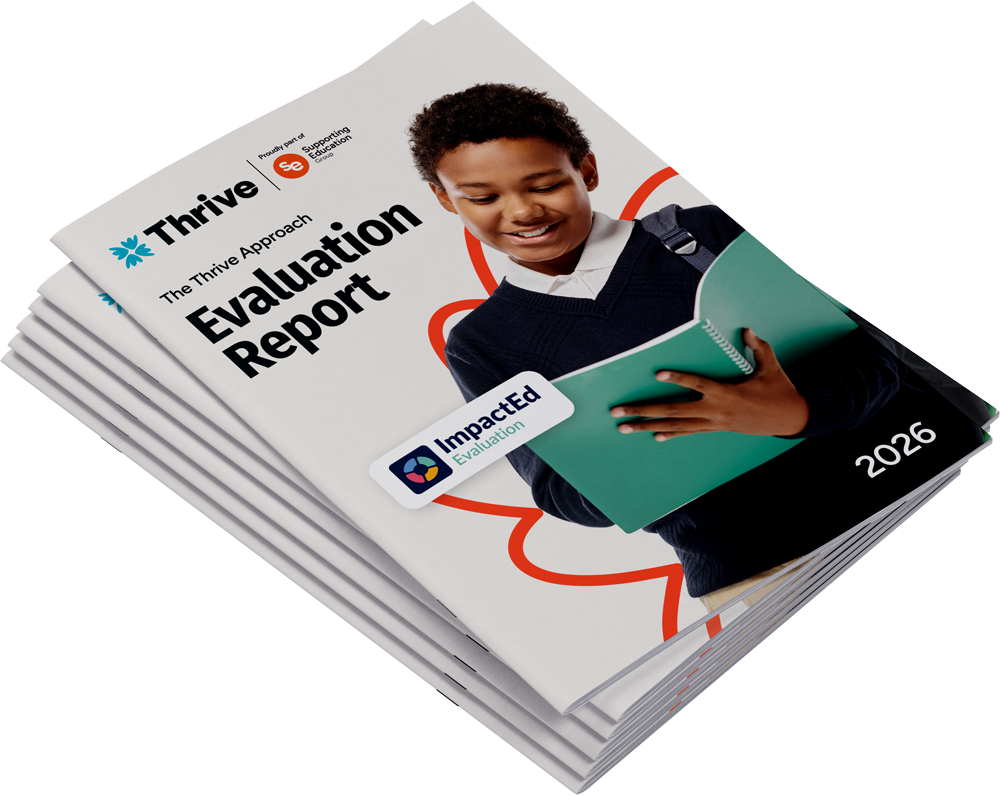
The Thrive Approach has been independently evaluated by ImpactEd across more than 2,600 schools.
An investment worth making
An independent study looking into the social return on investment of the Thrive Approach
An independent study looking into the social return on investment of the Thrive Approach estimates that between £7.70 and £9.06 of value for society is generated for every £1 invested in its implementation.
When longer-term outcomes are taken into account - including reductions in social and emotional problems later in life as a result of exposure to Thrive in childhood the potential social return rises to between £16.50 and £22.00 for every £1 invested in Thrive.
As part of the independent study, a series of interviews aimed to draw out the various contexts, nuances and outcomes relating to the implementation of Thrive. This process facilitated the development of a ‘Theory of Change’ for Thrive comprising a detailed analysis of the various outcomes as they occur over time. This research proved integral to understanding the value of Thrive to schools and settings as well as society, and in turn the development of the ‘Theory of Change’ for Thrive. Outcomes were identified for four main groups of stakeholders.
Outcomes
Incredible results
Short-medium term outcomes
- Increased self-awareness
- Empowerment
- Common understanding
- Reduced class disruption
Medium-longer term outcomes
- Improved relationships
- Personnel and skills development
- Improved strategies and systems in place to support, develop and strengthen behaviours for learning
- More effective specialist provision
Short-medium term outcomes
- Secure sense of belonging
- Improved emotional resilience
- Better access to and engagement in learning
- Fewer permanent exclusions
Medium-longer term outcomes
- Improved educational attainment
- Reduced substance abuse and self-harming
- Reduction in teenage pregnancies and young offenders
- Improved mental health
Short-medium term outcomes
- Improved well-being and quality of family life
- Increased tolerance between siblings
- Increased skills to support child’s education
- Improved adult relationships
Medium-longer term outcomes
- Positive impacts on future parenting
- Reduced pressure on family support services
- Reduction in depression and poor mental health
- Reduced transmission of social and emotional problems
Short-medium term outcomes
- Common understanding and language across sectors
- Emphasis on most needy referrals
- Improved management of vulnerable and challenging children and young people
Medium-longer term outcomes
- More links and cooperation between organisations
- Reduced breakdown of adoption and foster care
- Reduced number of children in residential care
The Process
Supporting wellbeing with...
- 2,800+ settings using Thrive
- 75,000+ people trained
- 795,500+ young lives impacted

Truancy levels have dropped dramatically. We’ve seen children who used to leave the site or hide in toilets seek out Thrive Practitioners to talk about what’s going on for them."
Headteacher
Take the next step toward lasting change across your school or system.
Join 2,600+ schools and thousands of educators already
transforming practice with Thrive.
Further reading
.jpg)
Impact reports
Learn more about the outcomes of Thrive for the four stakeholder groups
.jpg)
Theory of change
This report presents the findings of analysis of inâ€depth material gathered through a range of semiâ€structured interviews.

The social value of Thrive
Why has the the Thrive approach been implemented in UK schools since 2009