Seven reasons to embrace Thrive

24th May 2024 5 minute read

Blogs

Share this post:

 
Seven reasons to embrace Thrive

Our mission is to positively impact the lives of millions of children and young people, so they feel safe, supported and ready to learn. Ready to join us?


Seven reasons to embrace Thrive

1. Thrive is an effective tool used to identify and address social and emotional development needs and support mental health

2. Thrive is a powerful and proactive approach which helps to prevent mental health problems from developing

3. Thrive results in lower rates of referrals to external agencies and cost savings in terms of interventions and staff time

4. All children and young people from 0–25 can benefit from Thrive – it can be used in any and all schools, settings and other organisations

5. As well as benefitting children and young people, Thrive enhances staff wellbeing and aids job satisfaction and retention

6. Thrive improves attendance, attainment and behaviour and decreases exclusions and behavioural incidents

7. Thrive allows schools and multi-site organisations to benchmark and measure progress and impact using a unique assessment tool called Thrive-Online


Download our brochure to find out more

In the brochure, you'll discover:

  • How Thrive's proactive approach helps prevent mental health problems.
  • The cost-saving benefits of lower rates of referrals to external agencies.
  • The wide-ranging impact of Thrive on children, young people, and staff wellbeing.

(Plus, it's a powerful tool to share with your senior leadership team to help get buy-in!)

Download your copy

7 Reason to Embrace Thrive


Quote from Becky Wilson

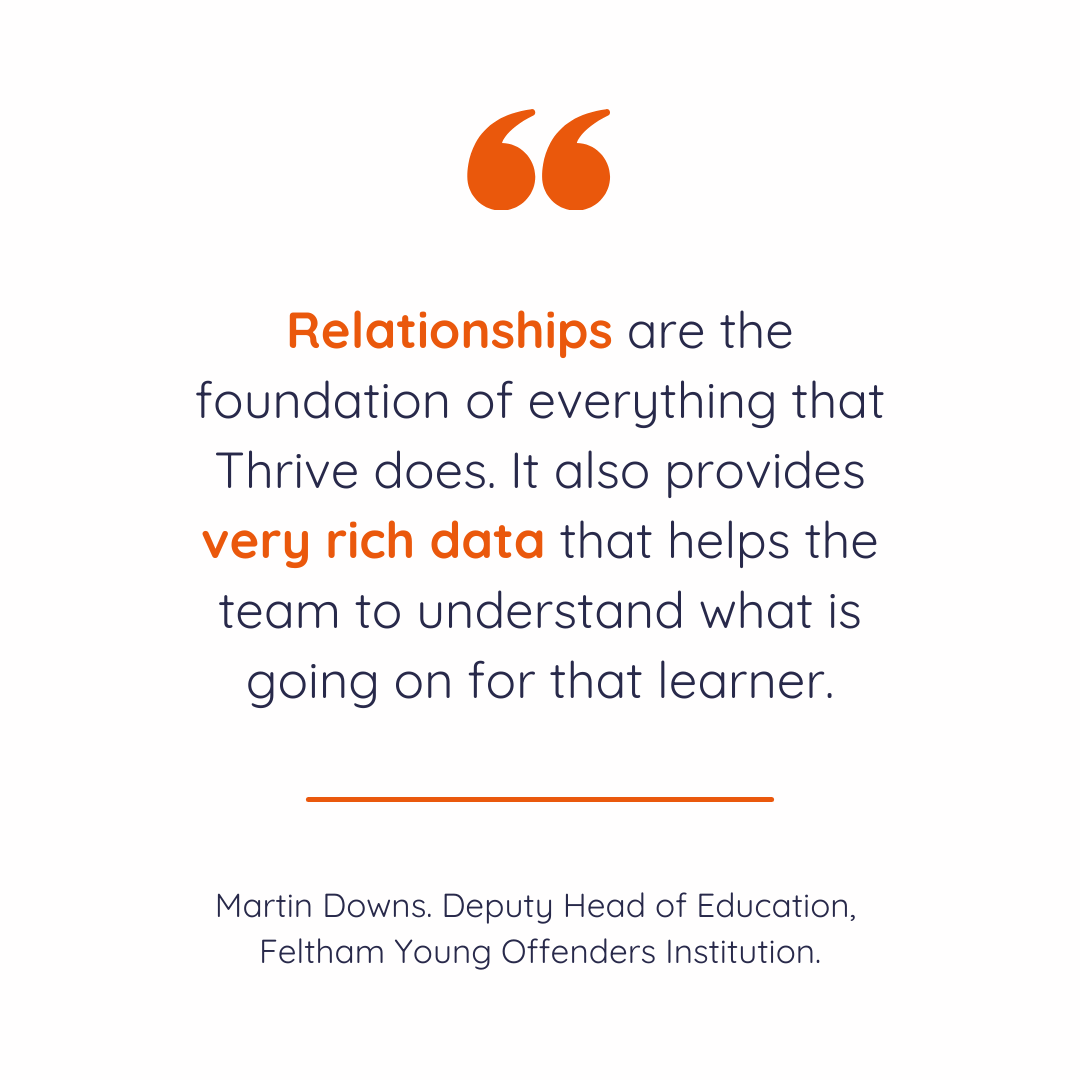
Quote from Martin Downs

Quote from Samantha Strange


Book a Discovery Call

Connect with your regional expert to find out how a whole school approach could help your setting manage behaviour and support staff. Designed to fit in around your schedule, these free 30-minute conversations via Teams give you a chance to have your questions answered and decide if our service is a fit for your needs.


Schedule your call 


Sector updates delivered straight to your inbox

Subscribe to the Thrive newsletter and receive our latest sector advice direct to your inbox

Subscribe today


Related content

Emotionally Based School Avoidance and School Anxiety: Key Signs Every Educator Should Know

1st September 2026 | Blogs

Emotionally Based School Avoidance and School Anxiety: Key Signs Every Educator Should Know

As pupils return to school this September, many educators are seeing the impact anxiety can have on attendance, engagement and wellbeing. In this blog, we explore emotionally based school avoidance (EBSA), the key signs to look out for, and why understanding what sits beneath the behaviour is essential to supporting children and young people back into learning.

Read full article →

How becoming a Thrive Early Years Setting aligns with the EYFS: A Practical Guide for Early Years Settings

27th August 2026 | Blogs

How becoming a Thrive Early Years Setting aligns with the EYFS: A Practical Guide for Early Years Settings

Explore how the Thrive Approach aligns with the Early Years Foundation Stage (EYFS) framework. This practical guide explains how Thrive supports the four EYFS principles and seven areas of learning and development, helping Early Years settings strengthen relationships, create inclusive environments and support every child to thrive.

Read full article →

Five signs your early years setting is moving from reactive SEND support to proactive inclusion

25th August 2026 | Blogs

Five signs your early years setting is moving from reactive SEND support to proactive inclusion

Many early years settings are working hard to support children with emerging and additional needs, but how do you know if inclusion is truly embedded in everyday practice? This reflective blog explores five signs your setting is moving from reactive SEND support to proactive inclusion, covering enabling environments, relationships, staff consistency, behaviour as communication and early intervention. It also offers practical questions to support team discussions and strategic reflection.

Read full article →

CONTACT US