
Facts about mental health in schools
Mental health issues among children and young people are increasingly common.
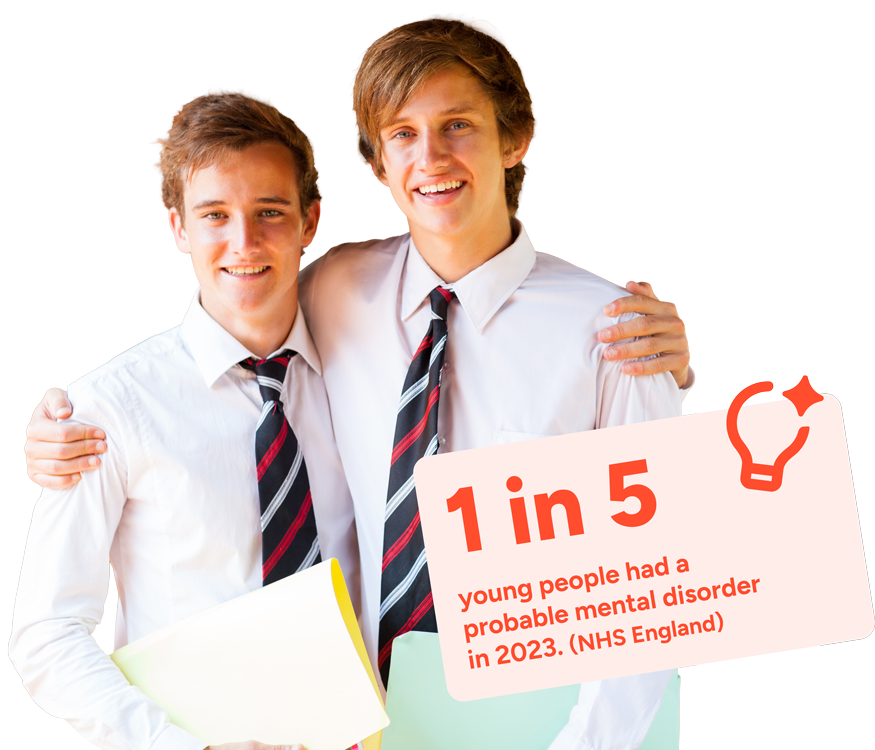
A recent survey by NHS England found that about one in five young people in England had a probable mental health disorder.
Schools need to implement effective support systems such as early intervention and access to professional help. This will help pupils succeed both in school and emotionally.
Implementing Wellbeing Strategies School-wide
Facts about mental health in schools
The government supports a comprehensive approach to mental health and wellbeing in schools. This approach is based on eight evidence-based principles to make sure it is implemented effectively.
These principles encompass:
- Leadership and management that supports and champions efforts to promote emotional health and wellbeing.
- Curriculum teaching and learning to promote resilience and support social and emotional learning.
- Enabling student voice to influence decisions.
- Staff development to support their own wellbeing and that of students.
- Identifying need and monitoring impact of interventions.
- Working with parents and carers
- Targeted support and appropriate referral.
- An ethos and environment that promotes respect and
The importance of prioritising wellbeing
01
Holistic development
Pupil wellbeing is key to their holistic development. It affects their ability to concentrate, engage, and retain information. When students feel well, they are more curious, resilient, and capable of handling challenges. A school environment that promotes wellbeing helps develop well-rounded young people prepared for life beyond school.
02
Emotional health
Supporting emotional health in schools is critical. Pupils that feel well are generally more confident and capable of building positive relationships with their friends and teachers. Schools that create a safe space for emotional expression often see less bullying and other disruptive behaviours. This makes the school a happier place to be.
03
Academic performance and attendance
Student mental health, academic performance and attendance have a strong correlation. When students are mentally and physically healthy, they're more likely to attend school and engage with learning. This often leads to better grades and a higher quality of work. By addressing mental health in schools, you can indirectly enhance the learning outcomes for all pupils.
04
Long-term benefits
Supporting student wellbeing has long-term benefits. It equips them with skills for better job prospects, relationships, and overall life satisfaction. It can also reduce future costs related to healthcare, social care, and the criminal justice system by giving young people the tools to lead productive lives.
How Thrive can support mental health in schools
Thrive is dedicated to improving mental health and wellbeing in schools. Through our training and tools, we help schools create supportive environments that foster the overall growth of every pupil.

Tailored Setting Packages
Thrive offers tailored packages for early years, primary, secondary and specialist and alternative provision settings.
Each package includes our Thrive Licensed Practitioner training, Thrive-Online subscription, and ongoing implementation support, all shaped around the specific needs of the setting. We run multiple cohorts throughout the academic year, making it easier to get started at the right time.
This evidence-backed intervention gives you the training and tools to identify and respond to SEMH needs early, supporting better attendance and behaviour, reducing exclusions, and improving wellbeing for both students and staff.

Levy-funded Apprenticeships
Thrive apprenticeships are a great cost-effective route for educators who want to specialise in social and emotional wellbeing.
Fully funded and available to professionals in England, our programmes include the nationally recognised Level 3 Early Years Educator Apprenticeship for those working with young children, as well as advanced Level 5 qualifications (equivalent to a foundation degree or Higher National Diploma) for practitioners supporting children and young people across all ages.
An innovative assessment and action planning tool
Thrive-Online is an award-winning software solution that helps schools adopt a whole-school or college approach to mental health.
With the tool you can assess pupils' social and emotional wellbeing and create tailored action plans to support them. By using Thrive-Online, schools can monitor progress, adjust strategies as needed, and achieve measurable improvements in pupil wellbeing.

Frequently Asked Questions about mental health in schools
Teachers can support children's mental health by creating a safe and inclusive environment where students feel comfortable expressing themselves. They should recognise signs of distress early, offer positive reinforcement, and model healthy coping strategies. Collaborating with mental health professionals and maintaining open communication with parents ensures comprehensive support.
Additionally, integrating stress management techniques into the curriculum and promoting peer support initiatives equips students with essential skills for managing emotions and building resilience. Teachers should encourage pupils to seek help from trusted adults or wellbeing resources within the school community when needed.
If a teacher believes a child needs more clinical treatment, they can refer them to the Child and Adolescent Mental Health Service (CAMHS). CAMHS offers access to trained mental health professionals such as social workers, psychologists, and family therapists. However, be aware that waiting times for this service can be long.
In 2023, a survey by NHS England revealed that one in five children and young people in England, aged eight to 25, likely experienced a mental disorder. This included mental health conditions such as anxiety, depression, and behavioural issues. Notably, rates of eating disorders also showed significant increases, particularly among 17 to 19-year-olds, affecting 12.5% of this age group compared to 0.8% in 2017.
These findings highlight how common mental health issues are among young people in education. As a result, programs like Mental Health Support Teams (MHSTs) have been set up in schools to offer support.
As more children face mental health challenges, there's a growing need for well-funded support systems within schools, including counselling and Mental Health Support Teams (MHSTs) for early intervention.
While schools can be a source of support, they also pose stress, particularly during exams. Integrating mental health services ensures timely access to resources. Financial constraints on schools and local authorities remain a barrier, though.
In addition to traditional counselling, Thrive offers a trauma-informed whole school approach focusing on social and emotional needs. Grounded in neuroscience and attachment theory, it empowers educators to build supportive environments. Thrive emphasises early intervention and resilience-building, not diagnosis or therapeutic counselling for specific conditions, to enhance overall wellbeing in school communities.
Mental health problems in schools can stem from various factors. Key causes include bullying, abuse, and bereavement, which can lead to long-term anxiety and depression. Difficult home life, like divorce or family conflicts, and major changes like moving to a new house can cause mental distress.
Teen substance abuse and pre-existing conditions like ADHD or autism also increase the risk of mental health issues. Providing targeted support and training in schools and colleges is essential for addressing these issues.