_800x800.jpg)
Even if you are set on supporting your children and young people, and improving their wellbeing and attainment, booking an appointment with someone you don’t know can feel daunting.
With this in mind, we thought we would give you an inside view into what a typical Discovery Call is like and hopefully dispel any anxiety you might have about booking a call
So, what is a Discovery Call?
It is an opportunity for you to ask us any questions you might have about the Thrive Approach and how it might be a good fit for you and your setting. Our Regional Development Managers won't sell to you, but they will let you know if they think we can help.
Is a Discovery Call free?
Both video and phone Discovery Calls are free.
A date and time that suits you
You have a busy schedule, we understand that. Educational settings are busy places. And like most senior leaders and education professionals your time is precious, so we have designed our calls to fit around your schedule. You just schedule your meeting at a time and date that suits you.
A date and time that suits you
You have a busy schedule, we understand that. Educational settings are busy places. And like most senior leaders and education professionals your time is precious, so we have designed our calls to fit around your schedule. You just schedule your meeting at a time and date that suits you.
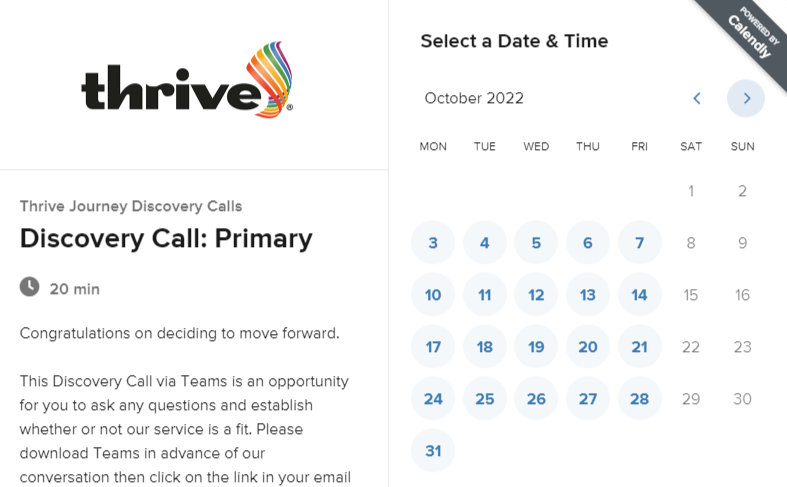
Conversation Length
Discovery Calls are 20 min long.
What happens when you follow your meeting link or answer our call?
You’ll be greeted by one of our Relationship Development Managers. The first thing they will do is ask you about your needs and what you would like to achieve by adopting the Thrive Approach.
Maybe you just want to make sure that you are building strong relationships with the children and young people under your care. You might want to improve attendance or ensure that all of your students are at the right stage in their development. You might want to reduce your exclusion rate and improve mental health or you might want to do all of the above.
.png)
What happens once we know what your needs are?
Once you have discussed your needs with one of our Regional Development Managers they will provide you with information about how Thrive can help you meet your needs and improve the wellbeing of the children and young people in your setting.
Next Step
Now that you know how a Discover Call works, and If you would find it helpful to have a more detailed discussion about your needs, just find your setting type and schedule your first Discovery Call right now.
Small actions can lead to a big ripple effect. If you enjoyed this post or found it helpful, please consider supporting us in our mission to help every child and young person feel safe, supported and ready to learn by sharing it using the social media buttons below. Want to join a like-minded community of senior leaders and classroom staff benefitting from insights and strategies to improve attendance, behaviour and attainment? Add your email address below. (It’s easy to unsubscribe).Pass it on