_800x800.jpg)
"People who weren't attending classes have been attending more"
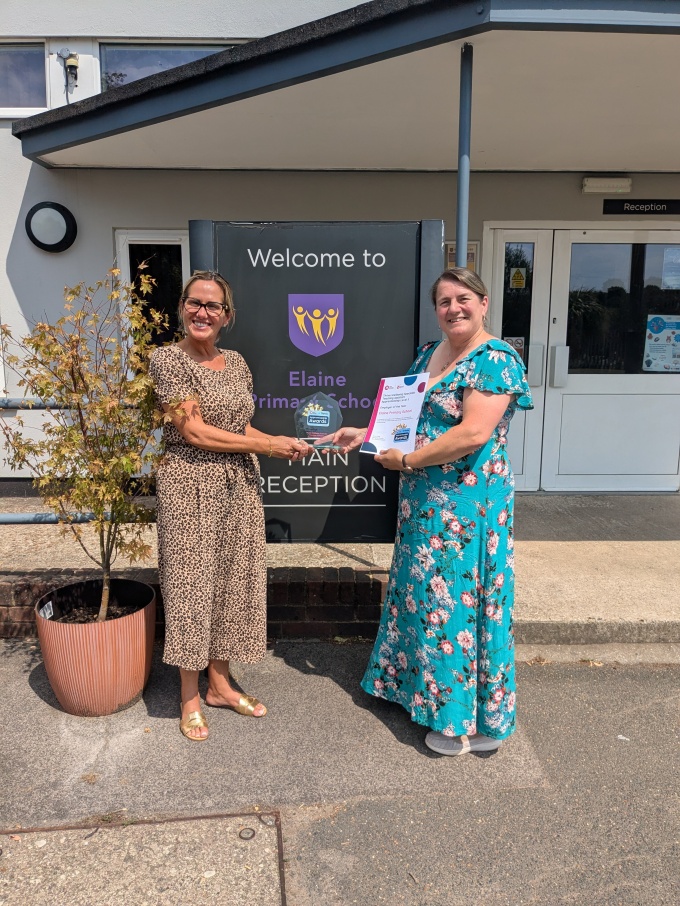
Each month, we celebrate the valuable role our Thrive trainers play and share messages of thanks from the delegates they've supported.
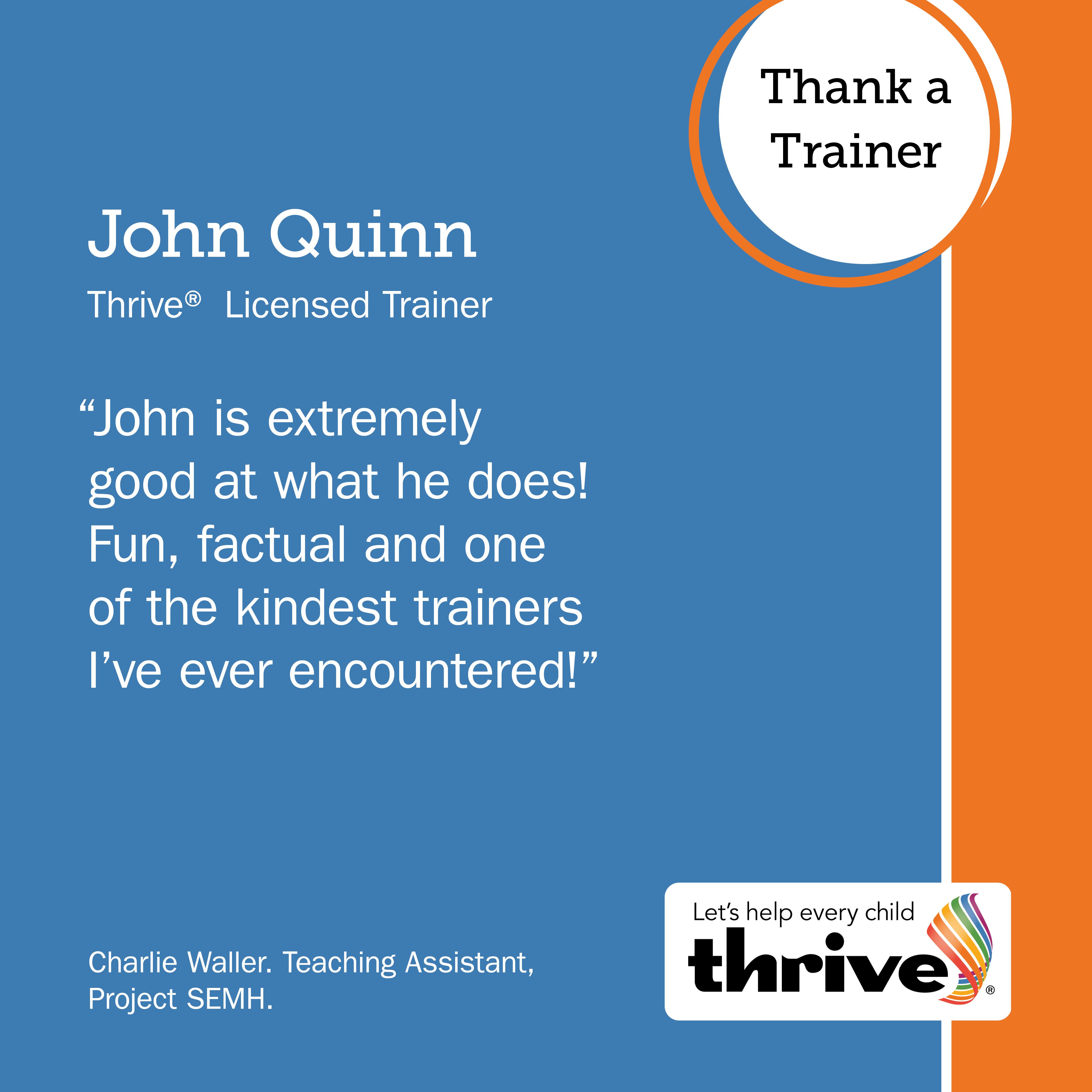
Read on to discover how John has impacted school refusers as well as school leaders. Why trusting your instincts could be the key to turning things around in your setting. And what Charlie and Sadie valued most about John's approach.
Thank a Trainer Interview: John Quinn
Q1. Please tell us about your career journey and what led you to becoming a trainer for Thrive.
I am an artist who works in schools across all ages and abilities but I came across Thrive when I worked as a teacher in a primary school. As soon as I started the training I realised this was more than the usual CPD courses. Thrive transformed how I work with young people and how I relate to myself. I wanted to become a trainer to encourage more people to take this transformational step.
Q2. How do you feel about being thanked by your course delegates for the role you’ve played in their development?
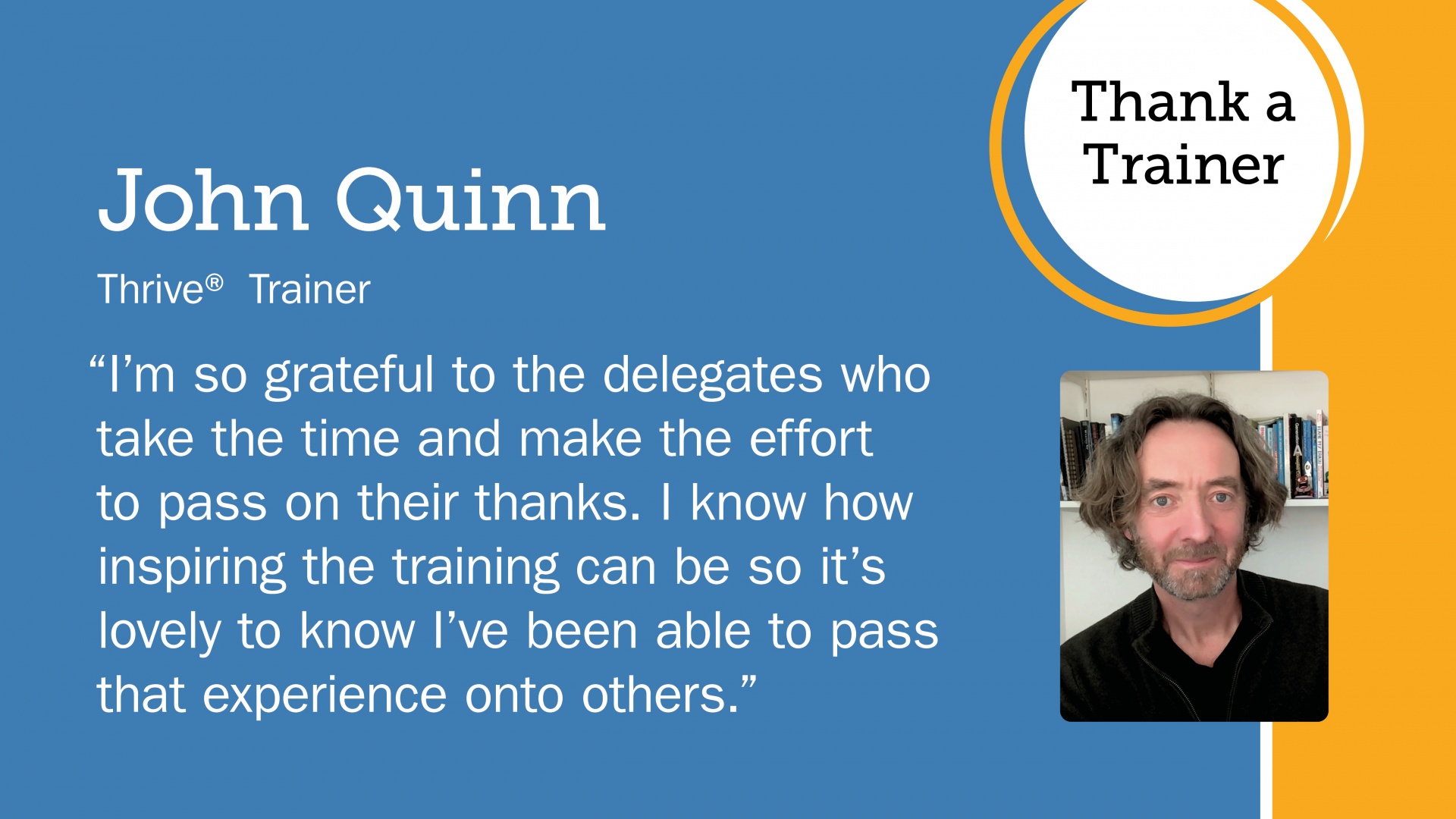
I feel a mixture of surprise and joy, (warm/fuzzy/tingly) as well as ‘have they got the wrong trainer?’ (imposter syndrome). It’s wonderful to be thanked in this way. It’s always a joy to see the impact the training has on delegates, both professionally and personally. I’m so grateful to the delegates who take the time and make the effort to pass on their thanks. I know how inspiring the training can be so it’s lovely to know I’ve been able to pass that experience onto others.
Q3. How does this nomination remind you of the impact you are having on the social and emotional development of children and young people?
This nomination has made me realise that by modelling Thrive to the delegates, they will be better able to support the social and emotional development of the young people they work with.
.jpg)
Q4. What about the schools your Thrive delegates work in? Can you share any examples of how they’ve been able to reduce exclusions, boost attendance or improve learning engagement and outcomes for the children and young people in their care?
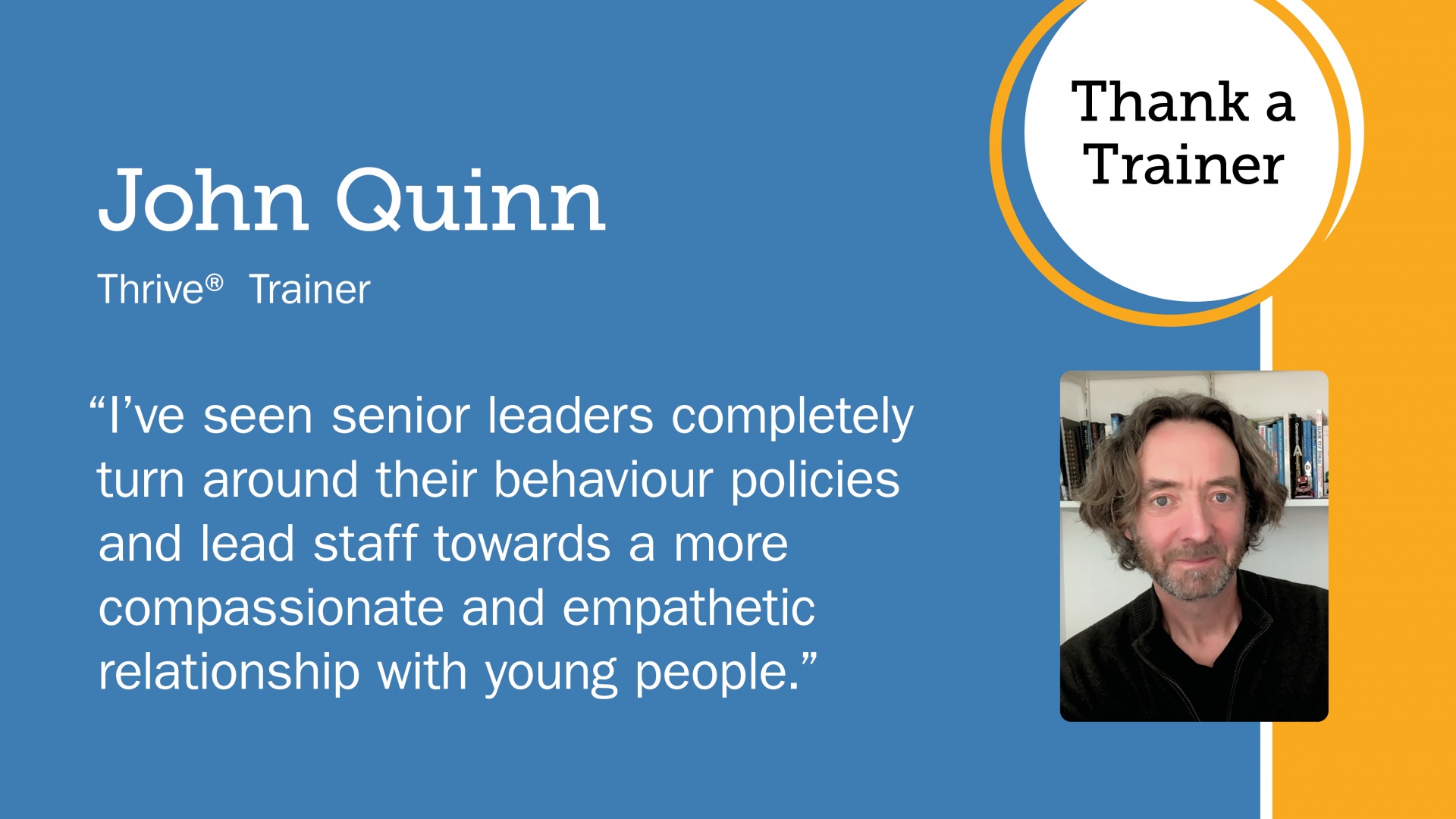
There have been so many examples of how Thrive has transformed the lives of young people through the delegate's one to one sessions. Young people who were not attending classes have been attending more. Young people who were refusing to come into school, gradually taking those steps towards returning. A specific example that springs to mind is a delegate who worked with a young person who refused to take their mask off and gradually, by using the VRFs and PACE, they found that one day the mask was off and the young person was smiling. I’ve seen senior leaders completely turn around their behaviour policies and lead staff towards a more compassionate and empathetic relationship with young people. Since the pandemic there has been a lot more interest from schools wanting to use Thrive to address social and emotional development for all young people. This can only be a good thing.
Q5. Why should people consider becoming a Thrive trainer? What’s been the most rewarding aspect for you?
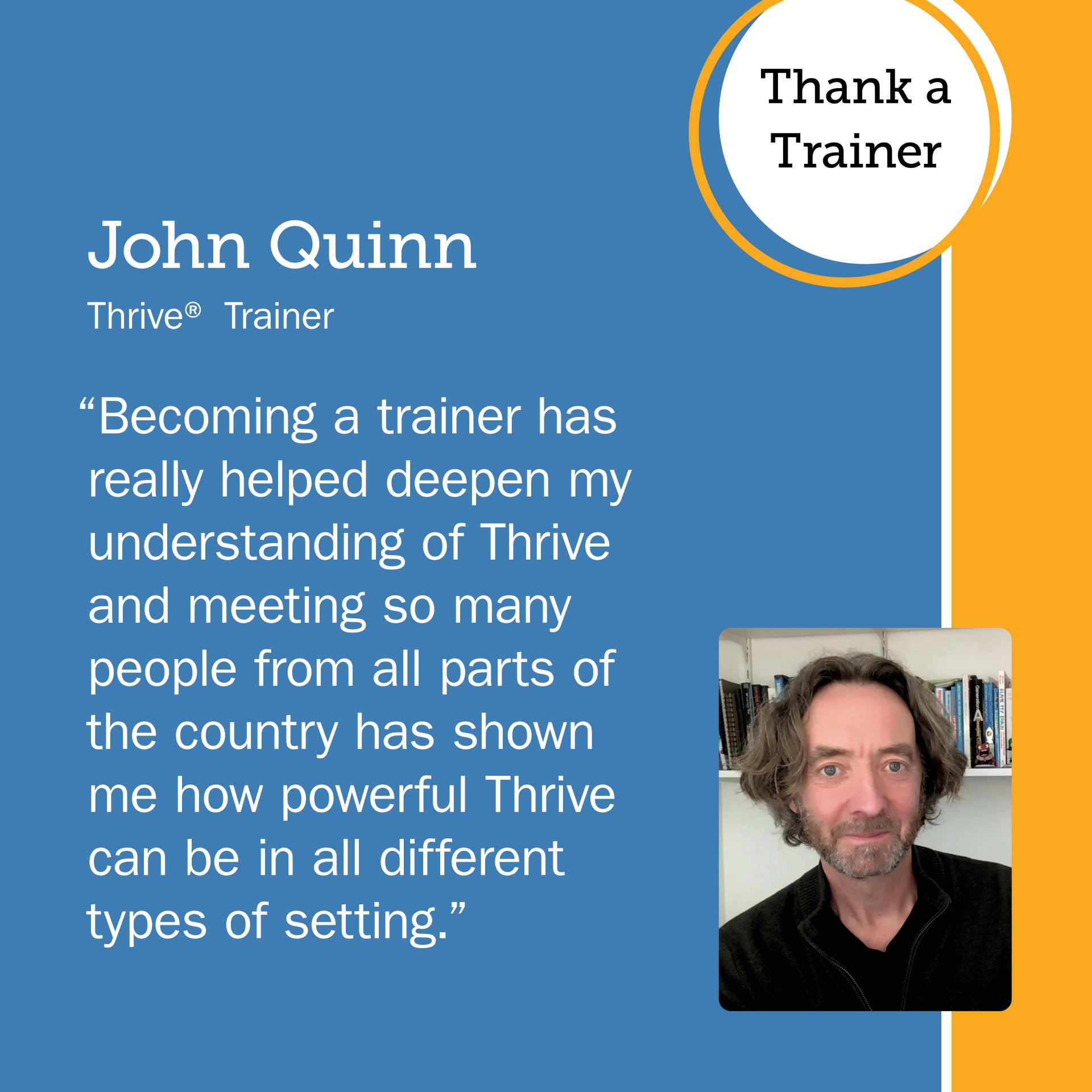
Becoming a trainer has really helped deepen my understanding of Thrive. Meeting so many people from all parts of the country has shown me how powerful Thrive can be in all different types of setting.
Q6. And finally, what 3 pieces of advice would you have for someone on the fence about taking one of Thrive’s training courses or embedding Thrive in their setting?
- Trust your instincts and Thrive will give you the tools, understanding and confidence to support all young people in your setting.
- Never underestimate the power you have to transform lives.
- Take simple steps, one after another.
Over to you
Each month, Thrive will be inviting you to thank a trainer who has consistently demonstrated a high degree of excellence and delegate care. If you've experienced Thrive training and you’d like to thank your trainer, please do so here. If you're already a Thrive Licensed Practitioner and interested in learning more about becoming a Licensed Trainer, click here for the detail and to book or here to book a 20-minute Discovery Call with Jo Glazier from our Member Services Team. These calls are designed to fit in around your schedule and to give you an opportunity to have your questions answered. We want you to spend your time, your money and your energy wisely so Jo won't sell to you - but she'll help you decide whether or not our transformational Train the Trainer course is a fit.
Small actions can lead to a big ripple effect. If you enjoyed this post or found it helpful, please consider supporting us in our mission to help every child and young person feel safe, supported and ready to learn by sharing it using the social media buttons below. Want to join a like-minded community of senior leaders and classroom staff benefitting from insights and strategies to improve attendance, behaviour and attainment? Add your email address below. (It’s easy to unsubscribe).Pass it on