
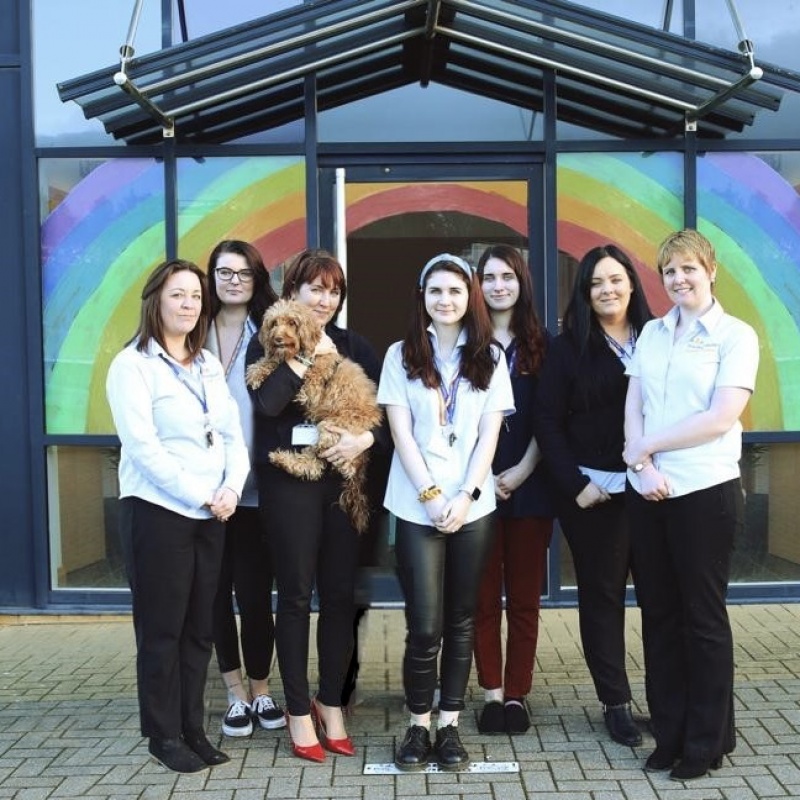
A specialist educational setting has been recognised as the first Thrive Ambassador School in Yorkshire for the role it plays in supporting the mental well-being of young people.
This article was originally posted on Richmondshire Today on February 8 and is available to view online here.
The Hub, based on Colburn Business Park, specialises in supporting children and teenagers with social emotional and mental health (SEMH) needs.
It also caters for pupils with special educational needs and disability (SEND).
It has ten pupils aged from ten to 16 that teachers work with on a one-to-one basis to support their emotional wellbeing and learning goals.
The Hub has been named as an Ambassador School with Excellence in the Environment after going through an assessment process with Thrive, which trains teachers and other education professionals to support the emotional and social development of children and young people.
The award recognises extraordinary schools which are making a positive impact on their pupils and on the wider community by having a focus on emotional health and creating an environment in which children’s wellbeing thrives.
The Hub director Becca Morgan said: “Thrive is something that is embedded throughout the school – in every room and throughout the day – so we were really excited to be recognised for the work we do.
“We know that we are changing lives and doing something pretty magical here but the outside world doesn’t know that.
“When children come to us they may be really struggling, but even the pupils who only spend a short time here make huge progress – more than they would do in a mainstream setting.”
Children, known as ‘hubsters’, are greeted individually by their teacher at the start of the school day and then they sit down, with staff, for breakfast together before starting lessons.
Each child has their own learning space that they can retreat to if they are feeling overwhelmed and there are plenty of sensory features in every room aimed at creating a quiet and calming atmosphere.
Pupils take part in regular yoga, forest school, cooking and meditation sessions to help them to feel calm and emotionally-regulated.
Dominique Sagar, Thrive relationship manager for the North West, North East, Yorkshire and Humber, said: “As soon as you walk into The Hub you are met with staff that have created a family unit, with each area of the building devised to meet children’s needs.
“It was clear during the time I spent there that each staff member puts a lot of time and effort into building relationships, which are at the heart of everything they do. The Hub richly deserves its Ambassador School award.”
Over to you
Are you leading the way in developing happy, emotionally-resilient children or young people? Are you feeling the impact of embedding the Thrive Approach throughout your setting? You too may be eligible for Thrive Ambassador School status. Click here to find out how to apply.
Pass it on
Small actions can lead to a big ripple effect. If you enjoyed this post or found it helpful, please consider supporting us in our mission to help every child and young person feel safe, supported and ready to learn by sharing it using the social media buttons below.
Want to join a like-minded community of senior leaders and classroom staff benefitting from insights and strategies to improve attendance, behaviour and attainment? Add your email address below. (It’s easy to unsubscribe).

(1)_680.png)