
Anti-bullying in Schools: How to Prevent, Identify & Tackle Bullying
Bullying can have a profound impact on children's wellbeing, learning and sense of belonging. Whether it happens in primary schools, secondary schools or online, bullying can affect attendance, confidence and long-term outcomes if left unaddressed.
Schools play a vital role in creating environments where every child feels safe, respected and supported. While responding effectively to incidents is important, the most successful anti-bullying strategies focus on prevention, helping children develop healthy relationships and a strong sense of belonging.
The Challenge
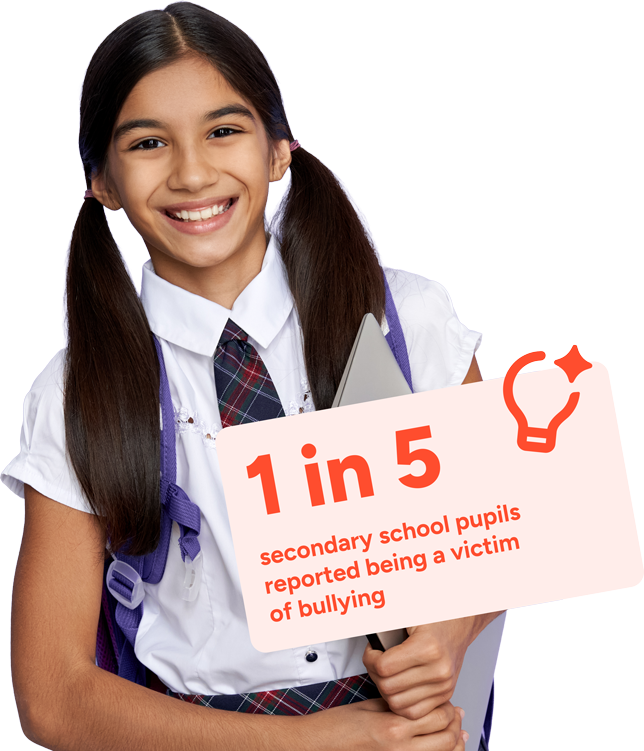
Bullying affects thousands of children and young people every, with recent DfE research finding that 21% of pupils reported being a victim of bullying in the previous 12 months.
Bullying is behaviour that is intended to hurt someone physically or emotionally, is often repeated over time and involves an imbalance of power.
Bullying within schools can take many forms, including physical, verbal, social and online bullying, as well as bullying related to race, religion, disability, sexual orientation or other protected characteristics.
- Bullying can have a lasting impact on mental health, wellbeing and self-esteem
- Children who experience bullying may be less likely to attend and engage fully in school life
- Schools have a legal duty to prevent bullying and respond effectively when concerns are raised
Creating an effective anti-bullying culture is about more than responding to incidents. The most successful schools focus on prevention, helping children develop positive relationships, emotional awareness and a strong sense of belonging so that bullying is less likely to occur in the first place.

free downloadable
Free Anti-Bullying Reflection Guide for Schools
Five questions every school should ask
Is your current anti-bullying approach preventing incidents before they occur, or simply responding when they happen? Download Thrive's free guide to:
- Reflect on the effectiveness of your school's current anti-bullying approach
- Uncover practical opportunities to strengthen policy, practice and culture
- Better understand how bullying may be experienced across your school community
-
Identify priorities that support safer, more inclusive learning environment
News articles
.jpg)
news article
The devastating impact of bullying on children and young people
The impact of bullying can extend far beyond childhood, leaving a lasting imprint on the emotional and mental wellbeing of young people. In this blog, we explore the consequences of bullying and provide some guidance on how to address and prevent bullying in your school.

news article
Bullying: Why behaviour can be a communication of unmet need
Addressing the underlying causes of bullying behaviour is a crucial part of creating an anti-bullying culture in schools. Read more about the things educators need to consider to effectively tackle bullying.
.png)
news article
Simple strategies to help you manage difficult conversations with parents and carers about bullying
Read our 10-point guide to help educators manage difficult conversations with parents and carers about bullying.
live online training
Preventing Bullying Through Awareness and Action
This practical course helps educators build a safe, inclusive and anti-bias culture where bullying is prevented early and responded to with consistency and care.
Through two online sessions, you'll gain practical tools, shared language and a relational framework to help:
- Create a more consistent whole-setting approach to preventing and responding to bullying.
- Strengthen anti-bullying policy, procedures, recording and reporting.
- Improve confidence across mixed staff teams, including leaders, pastoral teams, teachers and support staff.
- Build safer, more inclusive routines, relationships and learning environments.
- Turn audit findings into a clear action plan with owners, timeframes and simple measures of progress.
Take the next step toward lasting change across your school or system.
Join 2,600+ schools and thousands of educators already
transforming practice with Thrive.