
Apprenticeships are an effective way for schools to develop in-house expertise, retain talent and improve outcomes for pupils. Better yet, with funding available through the apprenticeship levy, employers can upskill staff at little to no cost.
What is the apprenticeship levy?
The apprenticeship levy is a UK government initiative introduced in April 2017 to encourage businesses to invest in apprenticeship programmes. The levy is essentially a tax on large employers, designed to fund apprenticeship training and increase the number of apprenticeships available across the UK.
Who pays the apprenticeship levy?
Employers with an annual pay bill of £3 million or more are required to pay the levy. The levy is set at 0.5% of the employer’s total annual pay bill. All eligible employers pay the 0.5% apprenticeship levy amount every month as part of their PAYE bill.
What can the apprenticeship levy be used for?
Employers who pay the apprenticeship levy can use their contributions to fund apprenticeship training for their employees. The funds are held in a Digital Apprenticeship Service (DAS) account and must be used within 24 months, or they expire.
How does the apprenticeship levy work?
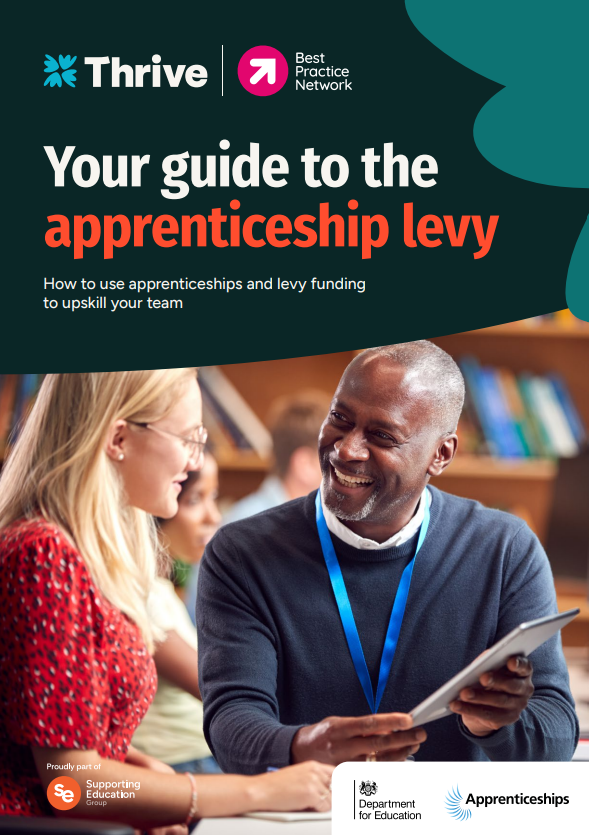
To learn more about how the apprenticeship levy works and how schools can use the levy to fund apprenticeships, download your free guide.
For smaller, non-levy-paying employers, there’s also guidance on securing government funding or levy transfers from larger organisations to upskill your team.
Thrive apprenticeships
Whether you’re looking to upskill your team, support children directly in the classroom or drive a whole school approach to wellbeing, these levy-funded apprenticeships are a game-changer for educators looking to make a lasting impact. Explore Thrive apprenticeships.
Pass it on
Small actions can lead to a big ripple effect. If you enjoyed this post or found it helpful, please consider supporting us in our mission to help every child and young person feel safe, supported and ready to learn by sharing it using the social media buttons below.
Want to join a like-minded community of senior leaders and classroom staff benefitting from insights and strategies to improve attendance, behaviour and attainment? Add your email address below. (It’s easy to unsubscribe).