_800x800.jpg)
Support instead of sanctions
Behaviour in the classroom can be a major cause of stress and frustration and have a lasting impact on pupil attainment. Yet the responses to behaviour adopted by primary schools across the UK are as many and varied as their rates of success.
When the Children and Young People’s Mental Health Coalition asked for views on current approaches to behaviour management, 56% of educators said the techniques used by their schools were ineffective. Plus, there was widespread concern about the use of punitive measures.
Promoting discipline instead of invoking punishment
At Thrive, we advocate replacing ‘time-out’ with ‘time-in’ with an adult as one of the most powerful ways of changing future behaviour.
This relational approach to promoting discipline rather than invoking punishment is one of the many factors that has transformed behaviour and engagement at Liskeard Hillfort Primary School in Cornwall. Before embedding this approach, Dr Tim Cook, the headteacher, had been on a mission to improve behaviour and attainment for 6 years.
He said:
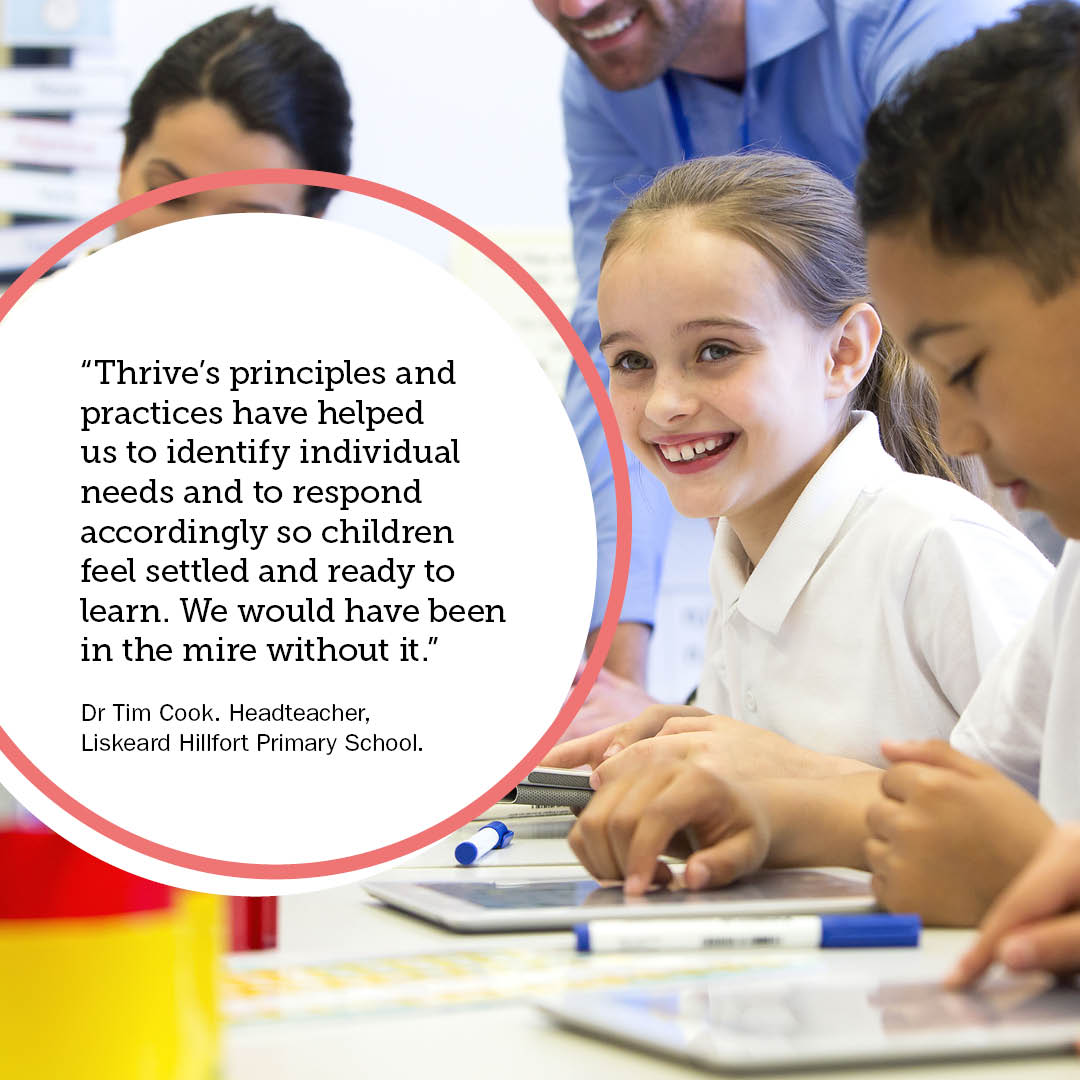
“In my professional opinion, you can’t progress more sophisticated things like phonics, reading and writing if a school is like the Wild West. Thrive’s principles and practices have helped us to identify individual needs and to respond accordingly so children feel settled and ready to learn. We would have been in the mire without it.”
In addition, fixed-term exclusion rates have fallen to zero from a high of 35 days in an academic year. Parental approval for the school stands at 100%. Pupil numbers have risen across all year groups. And a recent Ofsted monitoring visit praised improvements to new maths and phonics outcomes.
Over to you
At Thrive, we’ve been supporting educators to tackle behaviour for over 25 years. If you’re seeking calmer classrooms, engaged learners and improved attainment, click here to book a Discovery Call with your regional expert. Designed to fit in around your schedule, these free 30-minute conversations via Teams give you a chance to have your questions answered, decide if our service is a fit for your needs, and identify if you qualify for a £1,200 DfE grant to spend in your setting.
Pass it on
Small actions can lead to a big ripple effect. If you enjoyed this post or found it helpful, please consider supporting us in our mission to help every child and young person feel safe, supported and ready to learn by sharing it using the social media buttons below.
Want to join a like-minded community of senior leaders and classroom staff benefitting from insights and strategies to improve attendance, behaviour and attainment? Add your email address below. (It’s easy to unsubscribe).