
Today's young people face a myriad of challenges, from exam stress and the cost-of-living crisis to the effects of bullying and the pressures of social media. For some, navigating these challenges can get too much and start to impact their behaviour in the classroom. Sound familiar? You’re not alone.
Teachers report losing a quarter of lesson time managing disruptive behaviour in schools, and 62% have even considered leaving their roles because of it. Finding a strategy that addresses disruptive behaviours while supporting the overall wellbeing and development of pupils is crucial for fostering long-term, positive change. However, determining the best approach and implementing effective solutions can be daunting, especially with limited time and resources.
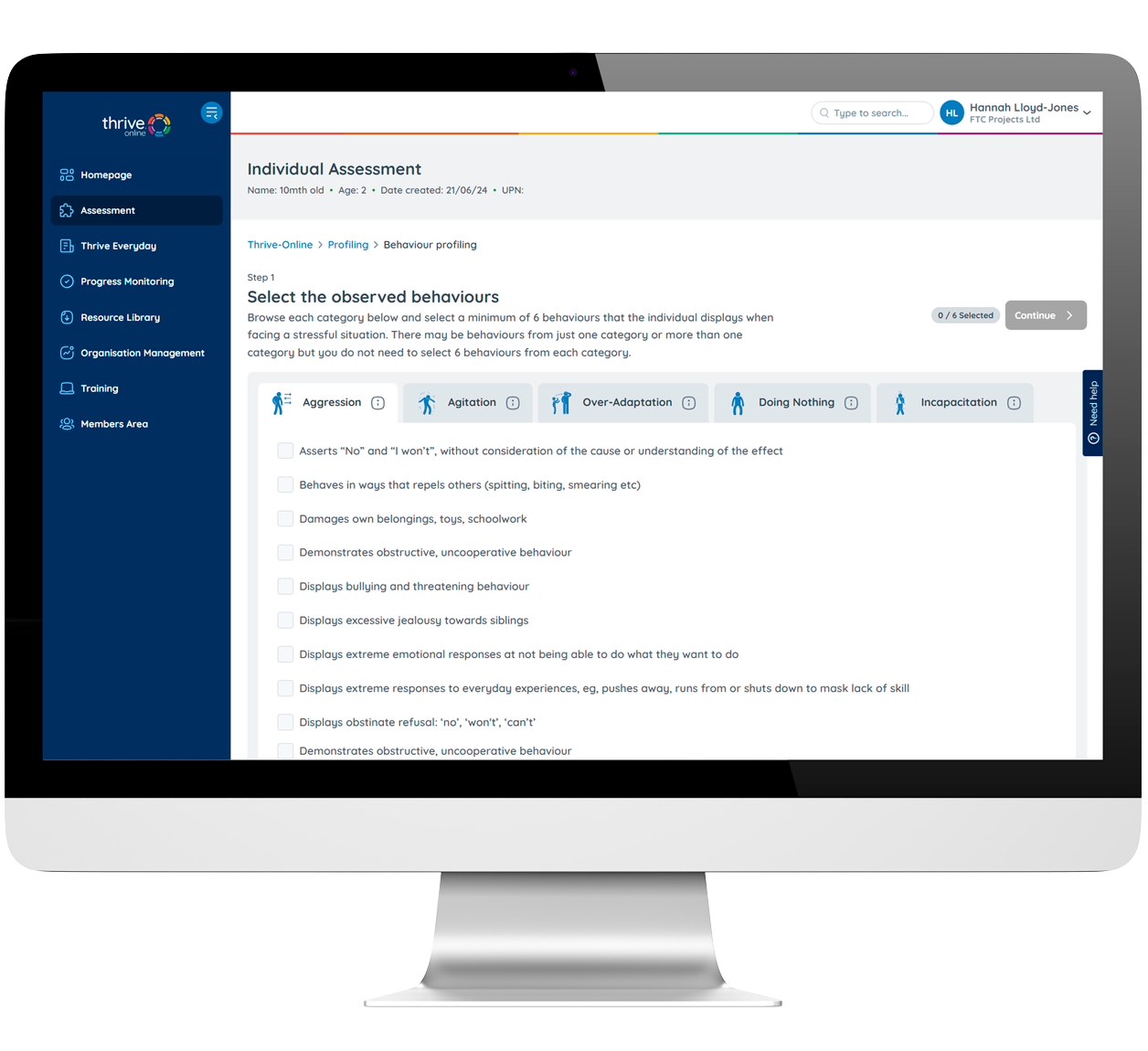
That’s why we created the Behaviour Assessment Tool in Thrive-Online. This innovative feature is designed to change the way you understand and respond to pupil behaviour in schools. With this tool, you can quickly assess disruptive pupils and identify the social and emotional development needs behind their behaviours. It then gives you a personalised action plan with easy-to-follow guidance on how to support and improve these areas, ultimately leading to positive behavioural changes.
The link between mental health and behaviour
A crucial aspect of behaviour management is recognising the link between mental health and behaviour in schools. Poor mental health in schools can manifest in various disruptive behaviours, such as aggression, withdrawal, and inattentiveness. Understanding behaviour as communication allows educators to look beyond the surface and address the underlying emotional needs of their pupils.
For instance, a pupil acting out in class might be dealing with anxiety or stress that they haven't been able to express constructively. By using the Behaviour Assessment Tool in Thrive-Online, teachers can identify these issues early and implement strategies that cater to the pupil's specific needs.
The benefits of Thrive-Online's Behaviour Assessment tool
Evidence-based assessments
Thrive-Online’s Behaviour Assessment Tool uses research-backed assessments to identify and tackle the root causes of disruptive behaviour in schools. This means you’re not just dealing with the symptoms but applying strategies that are proven to work, improving classroom behaviour effectively.
Tailored action plans
Every pupil is unique, and so are their behaviour challenges. Thrive-Online provides personalised action plans tailored to each pupil's specific needs. This targeted approach ensures that interventions are more effective, leading to significant improvements in class behaviour.
Progress monitoring
Easy-to-read graphs show the severity levels of behaviours, helping you focus your action plan on the most important areas. The progress monitoring features make it simple to track how pupils are improving over time, showing the impact of your efforts.
Support at every step
Thrive-Online offers free virtual introductory training that you can do anytime, fitting around your busy schedule. You don’t have to complete the training to start using the tool, but it’s there if you want extra insights. Plus, expert advice and support are available whenever you need them.
.png)
Real-world impact
Educators using Thrive-Online have seen fantastic results. Schools report better academic performance, improved attendance, and fewer disruptive behaviours. By addressing the social and emotional needs of pupils, Thrive-Online helps with behaviour issues and promotes long-term success. A great example of this is Masefield Primary School.
Masefield Primary School in Bolton introduced Thrive in 2021 to tackle academic challenges, disruptive behaviour, and social and emotional difficulties. Despite initial scepticism, the Thrive Approach was fully integrated into school life, from policies to family coffee mornings.
With staff trained in Thrive practices, Masefield saw amazing changes. Pupils' social and emotional needs were regularly assessed, and personalised action plans were implemented. As a result, the school is now oversubscribed, with students excelling in reading, writing, and maths, ranking in the top 3% nationally.
One pupil, Arthur, experienced a life-changing transformation. Struggling with emotions and low self-esteem, Arthur's behaviour, attendance, and academic performance improved significantly after regular Thrive sessions. His story is just one of many successes.
Read Full Case Study
Ready to see Thrive-Online in action?
Ready to join the 45,000+ educators already using Thrive-Online to support wellbeing and improve attendance, behaviour, and attainment? Click below to discover how Thrive-Online can revolutionise your school and support your commitment to improving classroom behaviour and mental health and behaviour in schools.
Get a QuoteBook a Thrive-Online Demo
Small actions can lead to a big ripple effect. If you enjoyed this post or found it helpful, please consider supporting us in our mission to help every child and young person feel safe, supported and ready to learn by sharing it using the social media buttons below. Want to join a like-minded community of senior leaders and classroom staff benefitting from insights and strategies to improve attendance, behaviour and attainment? Add your email address below. (It’s easy to unsubscribe).Pass it on