
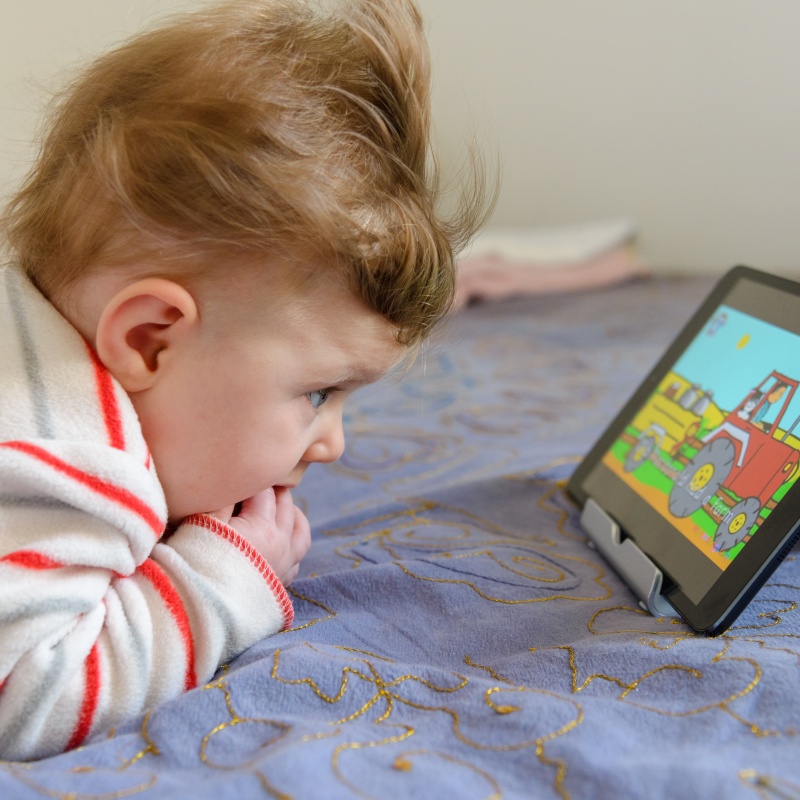
From tablets, TVs and smartphones at home, screens are shaping how many young children experience the world long before they arrive in nursery. Early years educators are increasingly supporting children whose early experiences have been heavily influenced by digital content. Attention can feel harder to hold, emotional regulation more fragile, and communication skills less secure than we might expect for their age.
This isn’t about blaming devices. Technology can offer creativity, connection and moments of learning. But the nature of children’s screen experiences has changed, and that change is showing up clearly in early years settings.
What’s changed in young children’s digital experiences?
Young children growing up with screens is not something new. What’s different now is the type of content and how it’s consumed. In the past, television programmes for young children were often slower, story-led and designed with learning in mind, limited to certain programmes at certain times of the day. They modelled language, social cues and emotional expression, and were frequently shared with adults.
Today, many young children are exposed to fast-paced, algorithm-driven content, often through platforms like YouTube or short-form videos, available instantly and at anytime. Screens can also begin to replace the way adults have traditionally played, talked, and explored alongside children. It’s an understandable response to busy lives, screens can quickly soothe or occupy a child when time is tight or energy is low. But when screen use becomes largely passive and replaces interaction, play or conversation, children have fewer opportunities to hear rich language, practise turn-taking, or build vocabulary.
Over time, this can mean fewer moments of shared exploration and less adult commentary during new experiences. Many children arrive in nursery with limited experience of adults being alongside them, delighting in their discoveries and helping them make sense of the world. These shared, real-world experiences are central to early development. Through being, doing and thinking with a responsive adult, children build the foundations of stress regulation, communication and emotional resilience that underpin later learning.
.png)
What the research shows about screens, language and development
Recent research shows very young children benefit most from limited, high-quality screen experiences, ideally shared with caring adults who support understanding and reflection. Passive screen time, especially when it displaces interactive play, can make it harder to develop key social and emotional skills. Early experiences with screens can also influence brain development, speech and language acquisition, and the ability to form secure relationships.
Finding balance with screens in the early years
This doesn’t mean screens should be off-limits. Thoughtful, guided use - short, interactive, connected to real-world experiences - can support learning. The key is balance: plenty of play, sensory experiences, and relationships alongside digital engagement.
Early years settings are uniquely placed to help restore that balance. Practitioners can support children to slow down, connect and make sense of their experiences. Small moments matter here. Talking together about a story seen on a screen, extending a digital theme into imaginative play, or using shared screen experiences as a starting point for conversation can all help turn technology into a bridge rather than a barrier.
At Thrive, we see how crucial these early experiences are. Supporting children to build language, emotional awareness and self-regulation in a digitally rich world lays the foundation for lifelong wellbeing and learning. Every interaction, every moment of connection, really does count.
.png)
By taking a balanced, intentional approach, early years educators can help children thrive in a connected world, giving them the skills to learn, play, and grow with confidence. For those looking to strengthen children’s personal, social and emotional development further, our PSED early years provision offers practical, evidence-informed tools that fit naturally into daily nursery and classroom routines.
Explore Early Years PSED provision
.png) Dani Lawson | Training, Practice and Innovation Lead
Dani Lawson | Training, Practice and Innovation Lead

(1)_680.png)