
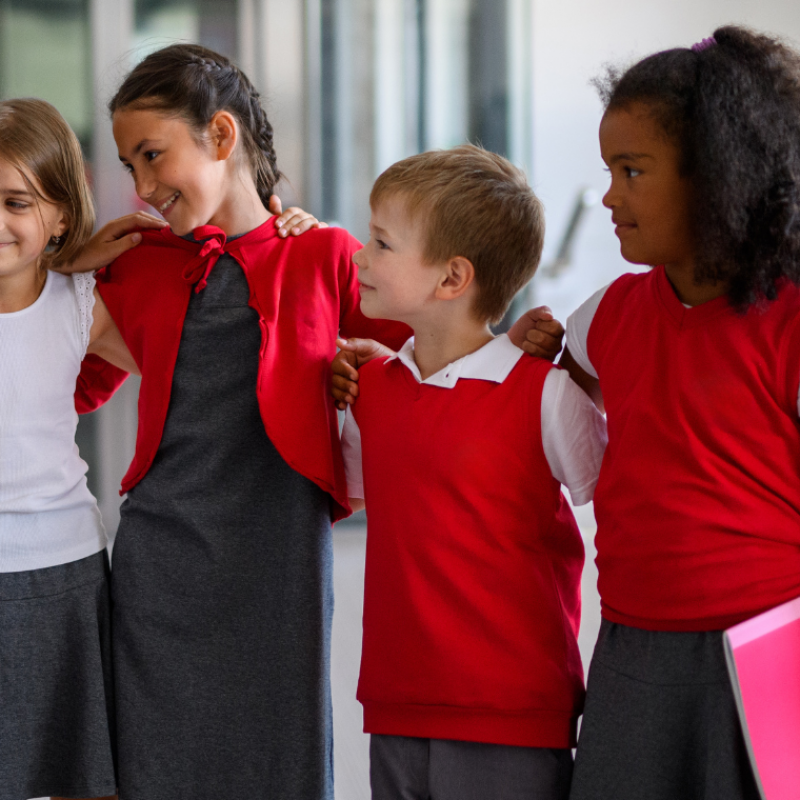
Children’s Mental Health Week 2026 invites us to reflect on a simple but powerful question, what helps a child feel emotionally “at home” in school? In our recent Thrive in Action webinar, we explored the neuroscience of belonging and mattering, and why these experiences are not just positive additions. They are foundational to children’s mental health, behaviour and engagement with learning.
Feeling emotionally 'at home' is a brain and body experience
When we talk about a child or young person feeling emotionally at home, we are not talking about comfort alone. We are talking about a state of the nervous system.
Our autonomic nervous system is constantly scanning the environment for cues of safety or threat, a process known in neuroscience as neuroception. This scanning happens beneath conscious awareness and is shaped by relationships, routines, language, tone, facial expression, and the wider environment.
When a child feels safe, defensive responses settle. Thinking becomes more accessible. Curiosity and connection open up.When safety feels uncertain, the body prioritises protection. Learning and flexibility become harder to reach.
This is why belonging is not created by policy alone. It is built through relationships. At Thrive, we hold a clear stance, behaviour is communication, and relationships are the intervention.
Belonging: “I have a place here” 
 Belonging is the felt sense of, “I have a place here.” It is not about fitting in or being compliant. True belonging allows difference. It communicates acceptance without requiring a child to change who they are to stay connected.Children notice patterns.
- Who is warmly welcomed back after absence?
- Who is protected when things go wrong?
- Whose voice is heard?
- Who gets benefit of the doubt?
When belonging feels secure, stress reduces and learning systems are more available. When it feels conditional, nervous systems stay alert, and engagement can dip.
Belonging is experienced repeatedly through everyday interactions. It cannot be instructed, only felt.
Practical ways to nurture belonging:
- Predictable welcome rituals that signal “you are expected” 
- Making inclusion visible through representation, language and voice 
- Low stakes ways to join in that reduce performance pressure 
- Protecting dignity in public while holding boundaries 
- Supporting peer belonging, so inclusion lives beyond adult direction 
Mattering in education, “I count here”
If belonging says, “I have a place here,” mattering says, “I count here.”Mattering is the sense that:
- I am noticed and valued
- I add value and make a difference
- I am missed when I am absent
Research shows that feeling valued and being able to add value together create mattering. A child can belong on paper and still feel invisible. When children feel they matter, motivation and persistence tend to increase. When they feel unseen or only noticed for difficulties, stress responses rise and behaviour may communicate unmet need.
Supportive relationships buffer stress. They increase children’s capacity to regulate, reflect and engage.
Practical ways to nurture mattering:
- Collect and move towards pupils, especially those who push away 
- Make absence visible - “We missed you!” 
- Matter in struggle as well as success 
- Mark endings and transitions with dignity 
- Offer real, meaningful contribution 
What can you take away from this?
Belonging and mattering are protective factors for children’s mental health and are built through moments, repeated over time. They shape how safe children feel, how they respond to challenge and how open they are to learning. When children feel emotionally at home, they are more able to learn and more likely to feel worthy of learning.
- Choose one belonging move 
- Choose one mattering move 
- Keep them small, intentional and consistent 
Watch the full webinar
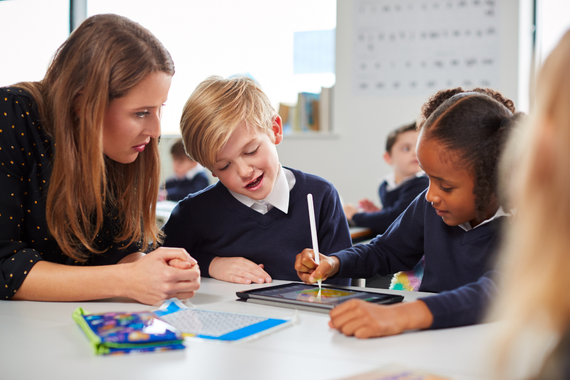
In the full session, Thrive’s Viv Trask Hall and Laura Nicholson are joined by Victoria White, Trust Leader for Quality of Education at The Consortium Academy Trust. Together, they explore the science behind emotional safety, the link between belonging and behaviour, and practical ways to strengthen relational practice in everyday classrooms.
Watch the full webinar to gain deeper insight on belonging and mattering.
Watch the full session here
(1)_680.png)