
Inclusion in Education
Inclusive education is about creating environments where every young person feels seen, understood, valued and able to participate fully in learning.As schools respond to increasingly diverse pupil needs, inclusion has become a central priority across education. Effective inclusive practice helps children and young people access learning, build positive relationships, develop a sense of belonging and achieve their potential, regardless of background, need or life experience.
.png)
Inclusion in schools: the current picture
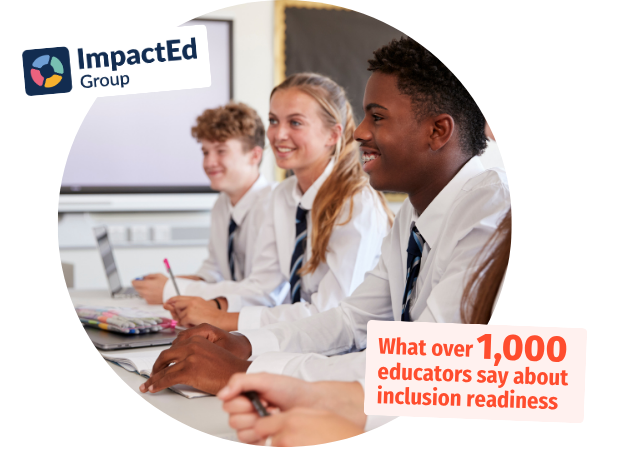
Recent findings from Thrive's Inclusion Readiness in Schools Report, developed in partnership with ImpactEd Group and based on responses from more than 1,000 education professionals, highlight both the commitment schools have to inclusion and the challenges they face in delivering it consistently
- 85% of educators understand what inclusive practice requires, but only 52% believe guidance is applied consistently.
- Just 23% feel they have sufficient time and staffing to deliver inclusion effectively.
- 69% say inclusion demands are affecting staff wellbeing and retention.
- Capacity remains the biggest factor influencing how ready schools feel to meet inclusion expectations
69% of educators say inclusion demands are impacting staff wellbeing & retention
Inclusive practice in the classroom: Thrive's Inclusive Principles
Creating inclusive classrooms means ensuring every child can access learning, feel a sense of belonging and develop confidence in who they are. Thrive’s Principles for Supporting Inclusive Practice offer practical ways educators can reflect on how inclusion shows up in everyday interactions, classroom environments and relationships.
- Seeing the Child as They Are - Start with the child’s strengths, interests and potential when planning support.
- Understanding Lived Experience with Compassion - See behaviour and emotional expression as communication shaped by experience.
- Staying Open and Curious - Listen first and stay curious about each child’s story and perspective.
- Holding Ambition with Gentle Support - Maintain high expectations while providing the support children need to succeed.
- Creating Spaces Where Children Feel They Belong - Design classroom environments where children feel safe, welcomed and included.
- Walking Alongside Families - Work with families as partners in understanding and supporting the child.
- Celebrating Identity, Story and Place - Recognise children’s cultures, identities and communities as sources of strength.
- Nurturing Children’s Voice and Agency - Create opportunities for children to share ideas, make choices and influence their environment.
.png)
Inclusion starts with the right conditions
When pupils’ social, emotional and mental health is supported, they attend, engage and feel they belong.
Inclusive education means ensuring all children and young people can access learning, participate fully in school life, and feel a sense of belonging
Schools, MATs and local authorities are responding to a growing range of needs, including those linked to SEND, mental health, behaviour, attendance and disadvantage. These factors can affect how safe, confident and engaged pupils feel in the classroom.
Inclusive practice brings together teaching approaches, support systems and school culture to help all pupils participate, develop and make progress.
Read our blog to find out more: What inclusive practice in schools really looks like
Every child deserves the opportunity to feel they belong, take part in learning and fulfil their potential, whatever their starting point, needs or life experience.
Expectations around inclusive practice continue to evolve, with greater focus on how settings identify needs early, adapt teaching, and provide appropriate support so that all pupils can access learning.
Schools are increasingly taking whole-setting approaches that connect inclusion with wellbeing, behaviour and engagement, recognising that these areas influence pupils' ability to participate and succeed.
Schools are also responding to new initiatives and funding opportunities designed to strengthen inclusive practice. For example, the Inclusive Mainstream Fund (IMF) aims to help mainstream schools build capacity to meet the needs of more pupils within their setting, supporting earlier intervention and more inclusive approaches.
Learn more about the Inclusive Mainstream Fund and what it could mean for your school.
Inclusion is now a standalone area assessed in the revised Ofsted framework (introduced November 2025), which requires a more intentional, evidence-led and impact focused evaluation on equity.
Settings must show practical steps towards improving inclusion, such as spotting needs early, adapting teaching so that every pupil can access learning and implementing targeted support where required