
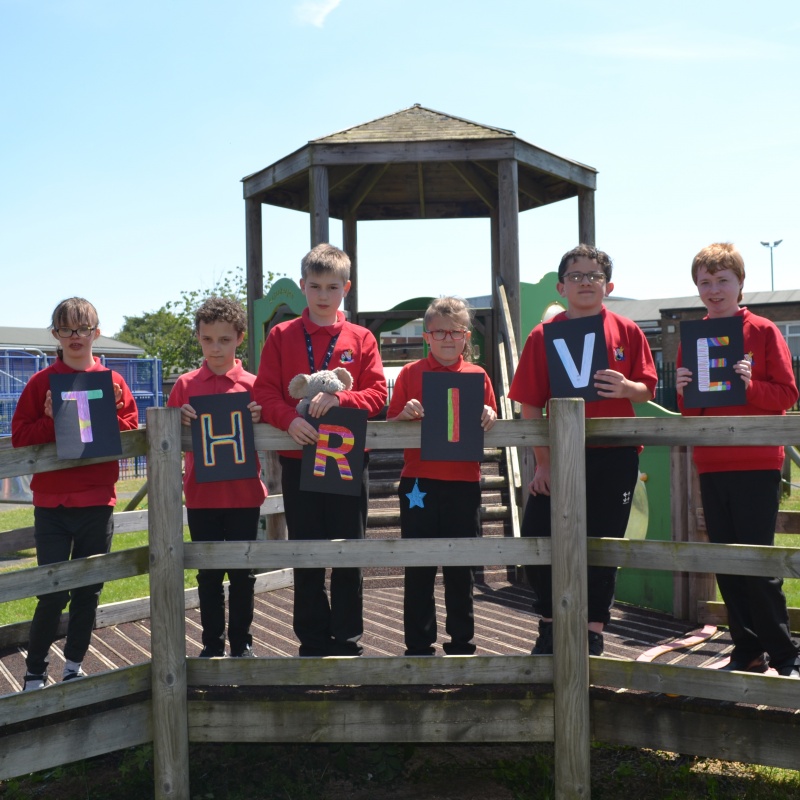
A Worcester special school has been named as a Thrive Ambassador School for the role it plays in supporting the wellbeing of its pupils in order to prevent mental health issues.
Regency High School, based in Warndon, has 240 pupils aged from 11 to 19 years. Many have additional needs, including learning difficulties, autistic spectrum disorder, social and emotional difficulties and speech and language difficulties.
The school has been named as an Ambassador School with Excellence in the Environment after going through a rigorous assessment process by Thrive, which trains teachers and other education professionals to support the emotional and social development of all children. The award recognises extraordinary schools which are making a positive impact on their pupils and on the wider community by having a focus on emotional wellbeing and creating an environment in which children's wellbeing thrives.
"We were really pleased to be named as an Ambassador School, it's something that all of the staff here have really got behind and driven forward. By understanding the neuroscience of how young people's brains work, we have been able to really focus on mental wellbeing and we have found that this has helped our pupils to be calm and ready to learn," said Kelly Gardener, Regency's Wellbeing Team Leader.
The Thrive Ambassador Schools scheme has been launched as a way of recognising excellence in member schools. There are five areas in which school can evidence how they use Thrive to support children's social and emotional development: environment, leadership, right-time, reparative and relationship, with a special Ambassador School of Excellence Award for schools that achieve the highest standard across all five categories.
As well as submitting an in-depth application form, the school was visited by Thrive staff, in line with coronavirus restrictions, to observe and assess the way that teachers and other staff implement the Thrive Approach to help build the emotional resilience of children, so that they can better manage the ups and downs of life and be more open to learning.
"Regency High School is a fantastic example of a school that has placed mental wellbeing at the heart of everything it does. I know that staff at the school have worked hard to embed the Thrive Approach and to understand the neuroscience that lies behind children's behaviour and they richly deserve the success they have had," said Kay Hamilton, Thrive Relationship Manager for the Central West area.
Over to you
Are you leading the way in developing happy, emotionally-resilient children or young people? Are you feeling the impact of embedding the Thrive Approach throughout your setting? You too may be eligible for Thrive Ambassador School status. Click here to find out how to apply.
Pass it on
Small actions can lead to a big ripple effect. If you enjoyed this post or found it helpful, please consider supporting us in our mission to help every child and young person feel safe, supported and ready to learn by sharing it using the social media buttons below.
Want to join a like-minded community of senior leaders and classroom staff benefitting from insights and strategies to improve attendance, behaviour and attainment? Add your email address below. (It’s easy to unsubscribe).

(1)_680.png)