
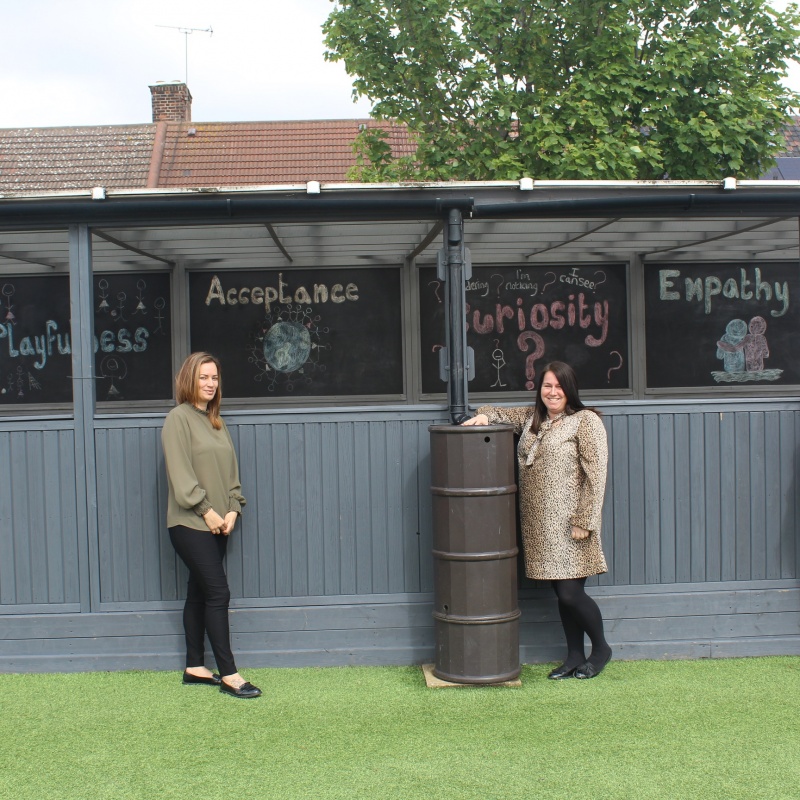
A Dagenham primary school has been named as a Thrive School of Excellence for the role it plays in supporting the wellbeing of its pupils in order to help prevent mental health issues.
Thomas Arnold Primary School, was named as a School of Excellence after going through a rigorous assessment process with Thrive®, an organisation which trains teachers and other education professionals to support the social and emotional development of children and young people. The award recognises extraordinary schools which are making a positive impact on their pupils, and on the wider community, by prioritising emotional wellbeing and creating an environment in which children can thrive.
Acting Headteacher Holly Pottle said: "We were really thrilled that all the hard work that our staff and families have done has been recognised. Embedding the Thrive Approach® has been a five-year journey and it was something we wanted to make sure was at the heart of everything we did. For us, this isn't just about ticking boxes, this is about genuinely impacting on the wellbeing of our children and making sure that they can better access learning because they are supported with their social and emotional needs."
The School of Excellence award is the highest level of achievement in Thrive's Ambassador Schools scheme, which was launched last year as a way of recognising excellence in member schools. There are five areas in which schools can evidence how they use Thrive to support children's social and emotional development: Environment, Leadership, Right-time, Reparative and Relationship, with the School of Excellence award reserved for schools that achieve the highest standard across all five categories.
As well as submitting an in-depth evidence and impact application form, the school was visited by Thrive staff to observe and assess the way that teachers and other staff implement the Thrive Approach® to help build the emotional resilience of children- so they can better manage the ups and downs of life and be more open to learning.
"Thomas Arnold is a fantastic example of a school that has placed mental wellbeing at the centre of everything it does. All staff have a good understanding of the Thrive Approach and are able to play their part in bringing it into lessons across the school day. There have been some amazing success stories as a result and the school really deserves to be recognised in this way," said Lee Prichard, Thrive's Head of UK Regional Development.
Over to you
Reduced anxiety and behavioural incidents. Calmer classrooms filled with engaged leaners. Improved relationships with parents and carers. These are just some of the outcomes reported by settings embedding Thrive’s whole-school approach to mental health and wellbeing. Are you ready to join them? Click here to get started.
Pass it on
Small actions can lead to a big ripple effect. If you enjoyed this post or found it helpful, please consider supporting us in our mission to help every child and young person feel safe, supported and ready to learn by sharing it using the social media buttons below.
Want to join a like-minded community of senior leaders and classroom staff benefitting from insights and strategies to improve attendance, behaviour and attainment? Add your email address below. (It’s easy to unsubscribe).


(1)_680.png)