

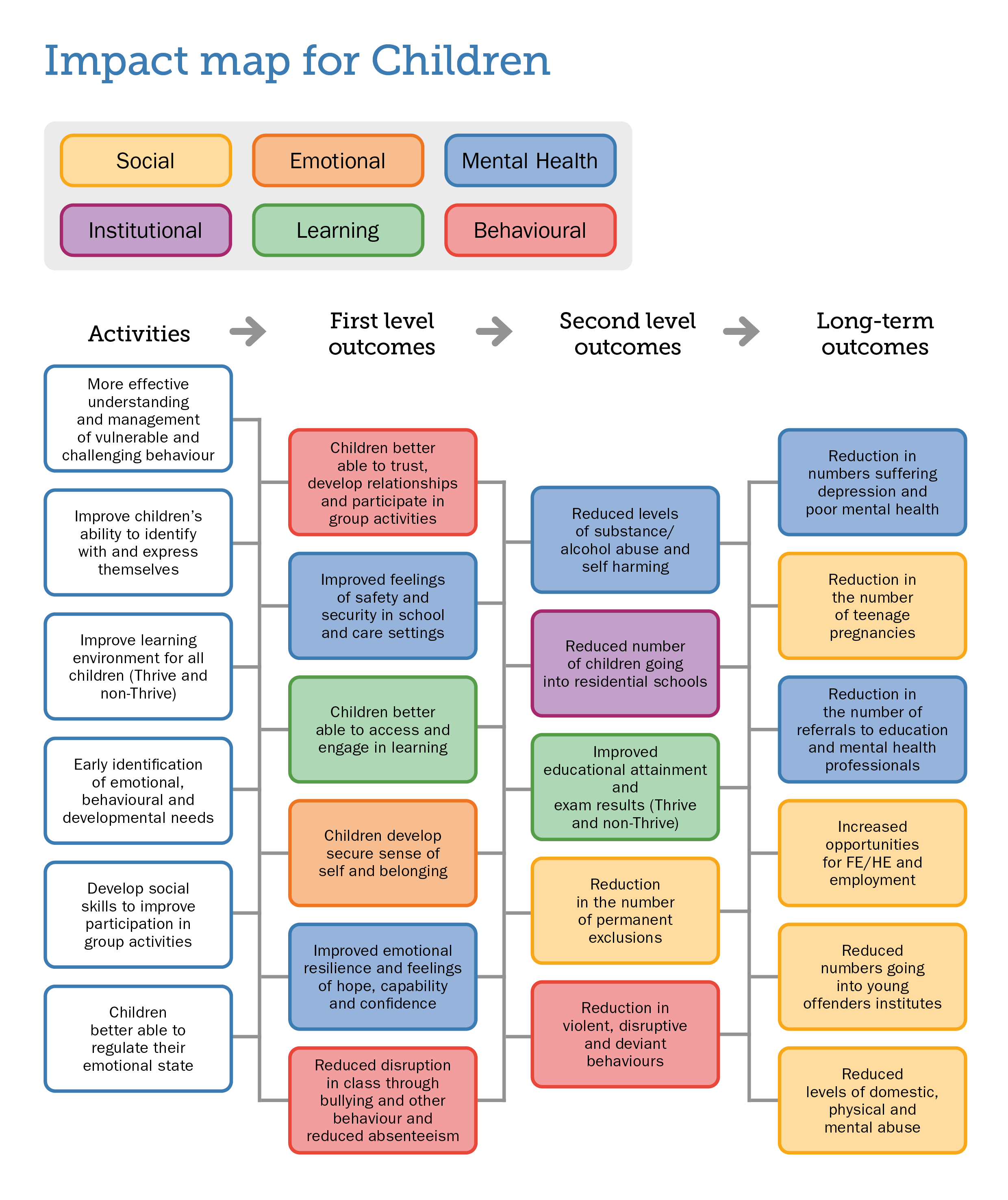
This impact map is an output from an independent study (Courtney 2013) that was commissioned to help us understand more about the impact of Thrive and the positive outcomes it delivers for its various stakeholder groups.
During the early stages of rolling out the Thrive Approach in schools across the UK we began to sense that the outcomes of addressing interrupted stages in a child’s learning were likely to be felt for many years to come.
Whilst we set out primarily to help children access and engage with learning more easily, anecdotal evidence suggested that many outcomes from this process could be life changing, not only for children and young people but also for their families and society as a whole.
Three main groups of stakeholders were consulted to gather measurable data on outcomes including:
- head teachers
- teachers
- support staff and professionals working in children’s services
Attempting to collect data directly from children, parents and families was beyond the scope of this study due to resource and ethical constraints, and so information relating to changes for these groups was gathered from the above stakeholders. In fact the Theory of Change work had already proved this to be both possible and evidential.
To read more about the outcomes of Thrive for the four stakeholder groups, please click here
To read about the context behind the Theory of Change for Thrive, please click here
Over to you
Reduced anxiety and behavioural incidents. Calmer classrooms filled with engaged leaners. Improved relationships with parents and carers. These are just some of the outcomes reported by settings embedding Thrive’s whole-school approach to mental health and wellbeing. Are you ready to join them? Click here to get started.
Pass it on
Small actions can lead to a big ripple effect. If you enjoyed this post or found it helpful, please consider supporting us in our mission to help every child and young person feel safe, supported and ready to learn by sharing it using the social media buttons below.
Want to join a like-minded community of senior leaders and classroom staff benefitting from insights and strategies to improve attendance, behaviour and attainment? Add your email address below. (It’s easy to unsubscribe).

(1)_680.png)