Schools are facing increasing challenges around pupil wellbeing, attendance, behaviour and inclusion. At the same time, school leaders are looking for effective ways to develop staff expertise, strengthen pastoral leadership and build leadership capacity.
For Emily Wilding Davison School, investing in a leadership apprenticeship for Pastoral Manager Deb Notley has delivered benefits far beyond individual professional development. From strengthening staff confidence and professional learning to improving how wellbeing impact is measured and evaluated, the apprenticeship has helped embed a more strategic approach to supporting children and young people.
Here's how Deb's leadership journey has influenced practice across their school community.
Why did Deb choose a leadership apprenticeship?
As a Pastoral Manager, Deb was already passionate about supporting children and young people's social, emotional and mental health (SEMH). Through her role, she worked closely with pupils experiencing emotional barriers to learning, behavioural challenges and difficulties linked to attachment and trauma.
Over time, she became increasingly aware that behaviour is often a form of communication and wanted to deepen her understanding of the underlying factors influencing children's experiences in school.
"I decided to complete the apprenticeship because I wanted to deepen my understanding of children's social, emotional and mental health needs and develop more effective strategies to support pupils within school.
"Through my role, I had become increasingly aware that behaviour was often a form of communication linked to unmet emotional needs, trauma, or attachment difficulties."
For Deb, the apprenticeship offered an opportunity to combine professional learning with practical application, strengthening her ability to support individual pupils while contributing to a wider whole-school approach to wellbeing and inclusion.
What difference has the apprenticeship made to the school?
While the apprenticeship has supported Deb's own professional growth, the impact has extended far beyond her individual role.
Deputy Headteacher Jo Kendrick shared that one of the most noticeable changes has been the renewed energy and leadership Deb has brought to her work.
"Since Deb started the apprenticeship she has renewed her passion and drive in school to make a difference for the students.
"She has always worked hard to do this, but the apprenticeship gave her a new lens to look at this through. Thinking about how to measure the impact that the Thrive approach makes to their lives."
For school leaders, this is often one of the greatest benefits of investing in professional development. When staff develop new knowledge and leadership skills, the impact can be felt across the wider organisation. In Deb's case, that influence has extended to colleagues across the school.
"This passion has spread across staff and we have seen an increased interest and a building of competence in the skill sets developed in those who attended CPD delivered by Deb."
The result has been growing confidence across the staff team and an increased focus on approaches that support children's emotional wellbeing and readiness to learn.
Developing pastoral leadership through professional learning
One of the aspects Deb found most valuable was the way the apprenticeship connected theory directly to her everyday work. The programme encouraged deep reflection, helping her evaluate her practice, develop her leadership skills and think more critically about how schools can support children and young people.
"What has stood out most is the depth of reflection involved in the programme and how strongly it links theory to everyday practice. The apprenticeship has encouraged me to think more critically about children's behaviour, emotional development and the importance of relational approaches."
Through this process, Deb strengthened pastoral leadership skills and developed greater confidence in influencing conversations around wellbeing, inclusion and support for pupils with additional needs.
From supporting pupils to influencing school strategy
One of the most significant outcomes of the apprenticeship has been Deb's increased confidence in communicating pupil needs and influencing decision-making. Rather than simply identifying concerns, she now feels better equipped to present evidence, advocate for young people and contribute to strategic discussions.
"I feel more confident in analysing and identifying key aspects of the learners' needs.
"I now better communicate the needs of the young people to senior leadership and feel they acknowledge and are more receptive to making changes I have advised."
This shift highlights an important aspect of leadership development in schools. Effective pastoral leadership is not only about supporting individual pupils; it is also about influencing systems, shaping practice and ensuring children's needs are reflected in decision-making at every level.
How did the apprenticeship support school improvement?
Alongside strengthening wellbeing practice, the apprenticeship has also supported wider school improvement priorities.
For Deputy Headteacher Jo and the leadership team, one of the most valuable aspects was the programme's focus on measuring impact and using evidence to inform decisions.
"The apprenticeship has offered a parallel focus to our school's own focus on using data to drive the decisions we make and the actions we take.
"Learning which data is pertinent to exploring impact was invaluable to us. It also prompted us to think wider about some of the data we collect and utilise in our strategic planning."
This learning has helped strengthen conversations around evaluation, impact and strategic planning, supporting the school's ongoing commitment to evidence-informed practice. For schools seeking to improve outcomes for children and young people, developing this type of expertise internally can have lasting benefits across wellbeing, inclusion and school improvement.
Why relational approaches matter more than ever
As a Thrive Licensed Practitioner, Deb believes that relational and trauma-informed approaches are becoming increasingly important within education. Many children and young people continue to face barriers linked to emotional wellbeing, anxiety and adverse experiences. Creating environments where they feel safe, understood and supported is essential.
"Thrive has helped me recognise the importance of consistency, connection and emotional attunement in helping children feel understood and ready to learn."
For schools, developing leaders who understand these principles can play a vital role in creating inclusive cultures where all children are able to thrive.
Should schools invest in leadership apprenticeships?
For Jo, the value of the apprenticeship is clear.
"It has been a great experience for our school, seeing a member of our team blossoming into a competent leader in a specialised area.
"In the world of specialist provision, the more we make masters of our trades, the more competently we are able to support our school population."
Deb agrees.
"I would strongly recommend the apprenticeship to other Licensed Practitioners. It provides valuable opportunities for both personal and professional development and allows practitioners to embed Thrive principles more confidently into their everyday practice."
Her experience demonstrates how leadership apprenticeships can help schools strengthen pastoral leadership, develop specialist expertise and build the confidence needed to influence positive change across an organisation.
Looking to develop pastoral and wellbeing leaders in your school?
Deb's story shows the impact that investing in staff development can have across an entire school community.
By strengthening leadership capability, improving confidence in decision-making and embedding a more evidence-informed approach to wellbeing, leadership apprenticeships can help schools build the expertise they need to meet the increasingly complex needs of children and young people.
With the Operational Manager apprenticeship standard being withdrawn, the Autumn 2026 cohort represents the final opportunity for schools to access this leadership pathway.
Thrive Wellbeing Leadership Level 5
Build the confidence, leadership capability and strategic expertise needed to influence wellbeing, inclusion and school improvement across your organisation.
Thrive Wellbeing Specialist Teaching Assistant Level 5
Develop advanced knowledge and practical skills to support children's social, emotional and mental health, helping them feel safe, understood and ready to learn.
Not based in a school setting? We also offer specialist apprenticeships for early years professionals, including the Early Years Educator Level 3 and Early Years Lead Practitioner Level 5 pathways, helping practitioners develop the skills and confidence to support children’s learning, development and wellbeing.
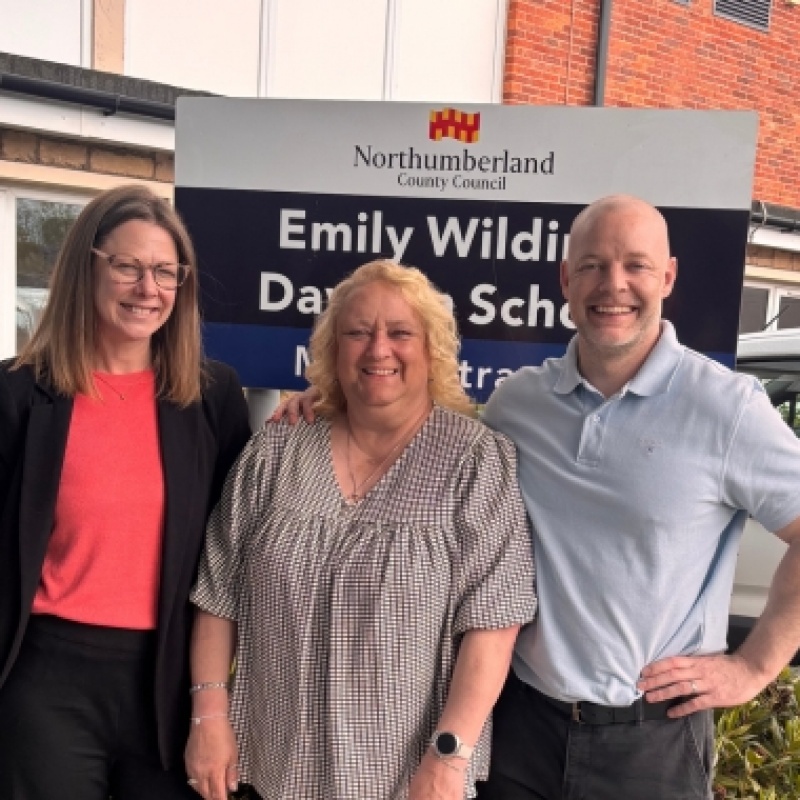
[Pictured: Amanda Seward, Head of Implementation Thrive. Deb Notley, Pastoral Manager Emily Wilding Davison School. Michael Hutchinson, Headteacher Emily Wilding Davison School.]
Pass it on
Small actions can lead to a big ripple effect. If you enjoyed this post or found it helpful, please consider supporting us in our mission to help every child and young person feel safe, supported and ready to learn by sharing it using the social media buttons below.
Want to join a like-minded community of senior leaders and classroom staff benefitting from insights and strategies to improve attendance, behaviour and attainment? Add your email address below. (It’s easy to unsubscribe).